
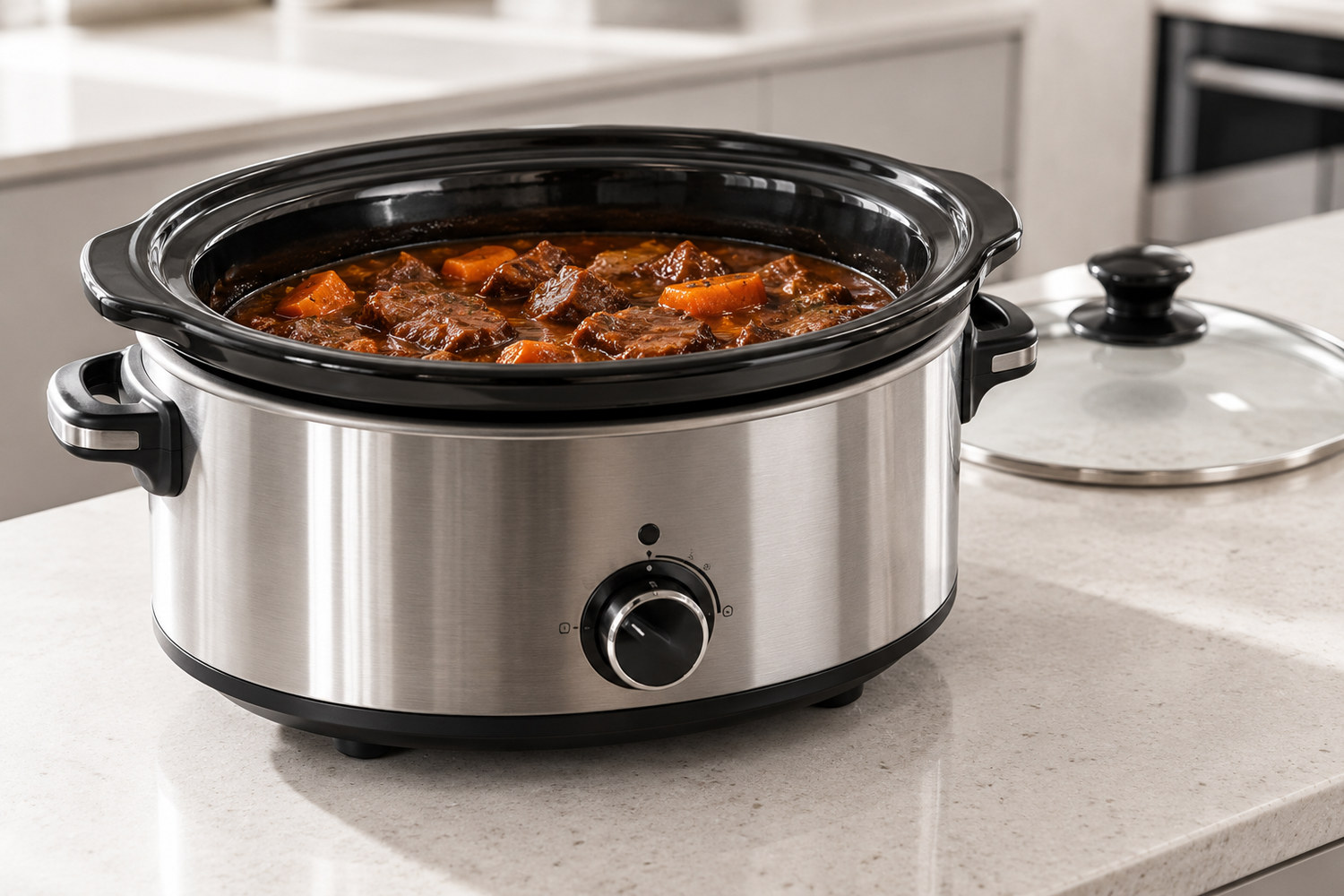
Slow cooker with saute function UK: is it worth choosing one over a basic model? For cooks who regularly soften onions, toast spices or brown meat before making a stew, an integrated sauté setting can save a frying pan and make preparation more convenient. For people who mostly prepare soups, porridge or simple one-pot dinners, the extra function may not justify the price or counter space.
The key is to distinguish an electric sauté programme from a removable pot that can be heated on a hob. Both can help with browning, but they work differently. This guide explains the practical differences, what UK reviewers have found and what to check before choosing a model.
What Is Sauté Mode on a Slow Cooker?
Sauté mode uses a higher heat than normal slow cooking so you can soften vegetables, cook aromatics or brown meat before beginning the long cooking stage. Rather than transferring food from a frying pan, you prepare it in the appliance’s cooking pot. The function is often labelled Sauté, Sear/Sauté, Brown or Brown/Sauté.
A useful UK example is the Instant Pot Superior Slow Cooker guide, which documents sauté temperatures of 110°C for reducing liquids, 135°C for softening onions and vegetables, and 160°C for browning meat. These are that model’s settings, not standard temperatures shared by every slow cooker.
Sauté is a preparation stage, not a substitute for slow cooking. Once ingredients have browned, follow the recipe’s instructions to add liquid and switch to Low or High. Do not assume a hot surface means a whole joint has cooked through.
Can a Slow Cooker Sauté Onions?
Yes, provided it has a genuine electric sauté function or a removable vessel that is explicitly hob-safe. Add the recommended amount of oil, let the surface heat as instructed, then cook chopped onions while stirring until softened. You can add garlic or spices at the appropriate point without burning them.
On the Instant Pot model above, the manufacturer advises leaving the lid off during sautéing and deglazing the inner pot afterwards. Other models have different instructions, so use the correct setting and utensils for your appliance. Do not put an ordinary ceramic slow cooker bowl directly on the hob.
Sautéing onions is particularly helpful for curries, tomato-based casseroles and chilli because it builds flavour before several hours of gentle cooking. It is optional for many recipes; you can still make good food with a basic slow cooker.
Slow Cooker With Saute Function UK: What Are the Main Benefits?
The main advantages are convenience, fewer transfers and the opportunity to capture browned flavours in the same vessel. When you sear beef and then add stock, the browned residue can be loosened into the sauce. You also avoid dirtying a separate saucepan, which can make weeknight cooking less cumbersome.
An integrated function can be useful when hob space is limited or when you are preparing the dish in a small kitchen. It does not remove the need to chop ingredients, stir during sautéing or wash the insert afterwards. In addition, many models are larger and more expensive than simple three-setting cookers.
For a wider look at buying criteria, read our UK slow cooker buying guide, which covers capacity, materials, controls and daily convenience.
Ceramic Slow Cooker With Saute Function: What Should You Know?
A ceramic cooking bowl does not automatically mean the cooker has a sauté setting. Most traditional glazed stoneware crocks are designed to sit in their electric base for low-temperature cooking, not to be put on a flame or induction hob. Using an unsuitable insert over direct heat risks damage.
Some modern appliances use ceramic-coated metal vessels, while certain premium cookers have a ceramic insert with a manufacturer-approved electric browning mode. These are very different constructions. Check the insert material, whether it is removable, which utensils are allowed and whether the maker specifies a sauté programme.
If material matters as much as convenience, our ceramic versus aluminium slow cooker comparison explains weight, coatings and cleaning trade-offs.
What Are the Best Slow Cookers With a Saute Function?
There is no universally best model for every household, but recent UK hands-on reviews provide useful examples. BBC Good Food’s 2026 slow cooker round-up highlights the Ninja Foodi PossibleCooker MC1101UK, with a 6-litre capacity and electric Sear/Sauté mode, and the 7.1-litre Instant Pot Superior Slow Cooker, which offers searing, steaming, slow cooking and warming.
The same review discusses the larger 8-litre Ninja Foodi PossibleCooker with Sear/Sauté and other functions, and the 6-litre GreenPan Elite 8-in-1 with a Brown/Sauté mode. These examples illustrate different capacities and feature sets, not promises that a particular model is always the best deal. Check current manufacturer specifications and independent testing before buying.
Do not confuse these with models such as the Crock-Pot Sizzle and Stew: its removable metal pot can be used on an approved hob for browning, but that is different from pressing an electric sauté button. Neither type is inherently superior; it depends on whether you want to use the hob.
Should I Buy a Slow Cooker With a Saute Feature?
A sauté feature is a sensible priority if you regularly make onion-based sauces, seared beef casseroles or spice-rich curries and would appreciate preparing everything in one vessel. It is less important if you already enjoy using a frying pan, mostly cook recipes without a browning step, or have a tight budget.
Consider the entire appliance rather than one button: usable capacity, internal shape, timer behaviour, whether the base becomes hot, insert weight and cleaning instructions. Our related article Slow Cooker With a Sear Function UK: Is It Worth It? compares integrated searing against hob-safe pots in more detail.
Is a Small Slow Cooker With Saute Function Suitable for 2 Adults UK?
For two adults, a compact cooker can work well, especially for dinners without much leftover food. A capacity of roughly 2.5 to 3.5 litres may be a practical starting point for many couples, but recipes, appetites and batch-cooking habits matter more than the household count alone. Check the usable fill guidance rather than assuming every labelled litre is available for cooking.
True electric sauté functions may be more common on larger or multi-function models, so a small sauté-capable cooker may involve fewer choices. If you want leftovers for lunches, extra capacity could be worthwhile; if you mainly make two portions, a bulky 7- or 8-litre machine may be unnecessary.
Our guide to buying a slow cooker for one person explains compact-cooker trade-offs, while the UK slow cooker size guide compares common capacities.
Is Sautéing Better Than Browning Meat in a Separate Pan?
The cooking principle is similar: a hot surface develops colour and savoury flavours before the lower-temperature cooking stage. A dedicated frying pan may offer more browning area or better heat control, while integrated sautéing saves a transfer and can keep the cooking juices together.
For good browning, dry the surface of the meat, heat the pot as instructed and avoid overcrowding. Work in batches if necessary, and add liquid to loosen the browned residue before slow cooking. Follow the manufacturer’s utensil advice for non-stick surfaces and its instructions on whether the lid should be off.
How Does Sauté Mode Affect Cleaning and Running Costs?
Using one vessel can reduce washing-up, but high-heat cooking may leave sticky residue. Some non-stick metal inserts are easy to wipe clean; others have particular restrictions on dishwasher use and abrasive cleaners. Never immerse the electrical base or presume that oven-safe means hob-safe.
Sautéing draws relatively high power for a short time, whereas slow cooking runs at lower heat for hours. Total electricity use depends on the appliance, food and duration. It is therefore difficult to claim that integrated sautéing always saves energy compared with a hob. Our UK slow cooker electricity guide explains how wattage and hours translate into consumption.
What Should You Check Before Buying?
- Function wording: confirm whether the appliance has electric Sauté or only a hob-safe removable insert.
- Hob compatibility: if using a removable pot, check the approved gas, electric or induction surfaces.
- Capacity: match usable litres to your normal portions and how often you batch cook.
- Insert material: note the weight, coating and permitted utensils.
- Cleaning: confirm which parts are dishwasher safe and how to clean the base.
- Controls: understand cooking timers, Keep Warm behaviour and any additional programmes.
- Footprint: measure your worktop and cupboard before choosing a large multicooker.
Frequently Asked Questions
Can You Sauté Vegetables Before Slow Cooking?
Yes, using a supported sauté programme or hob-safe insert. Onions, mushrooms, peppers and spices can benefit from an initial hot cooking stage. Follow the recipe and add liquid before switching to the slow-cook setting.
Is Sauté Mode the Same as the High Slow Cooker Setting?
No. High is normally a slower, moist cooking programme; Sauté applies substantially higher direct heat for browning or reducing. A normal High setting will not replicate frying onions in a hot pan.
Can You Use Sauté Mode With the Lid On?
Follow the manufacturer’s directions. For example, Instant Pot’s UK Superior Slow Cooker guide specifically says not to use the lid during sautéing. Other models may have different requirements.
Is a Saute Function Worth It for Vegetarian Meals?
It can be. Sautéing onions, garlic, mushrooms or spices adds flavour to lentil dishes, bean chilli and vegetable curries, although many vegetarian slow cooker recipes work perfectly well without a separate browning stage.
Final Verdict: Is a Slow Cooker With Saute Function UK Worth It?
A slow cooker with saute function uk can make meal preparation more convenient, especially when you routinely brown meat or vegetables before a long cook. It is not essential for tasty slow-cooked meals, and a standard cooker with a separate pan may be just as effective. Check that the feature is genuinely electric rather than hob-dependent, choose a suitable capacity and prioritise a model you will find easy to use and clean.