
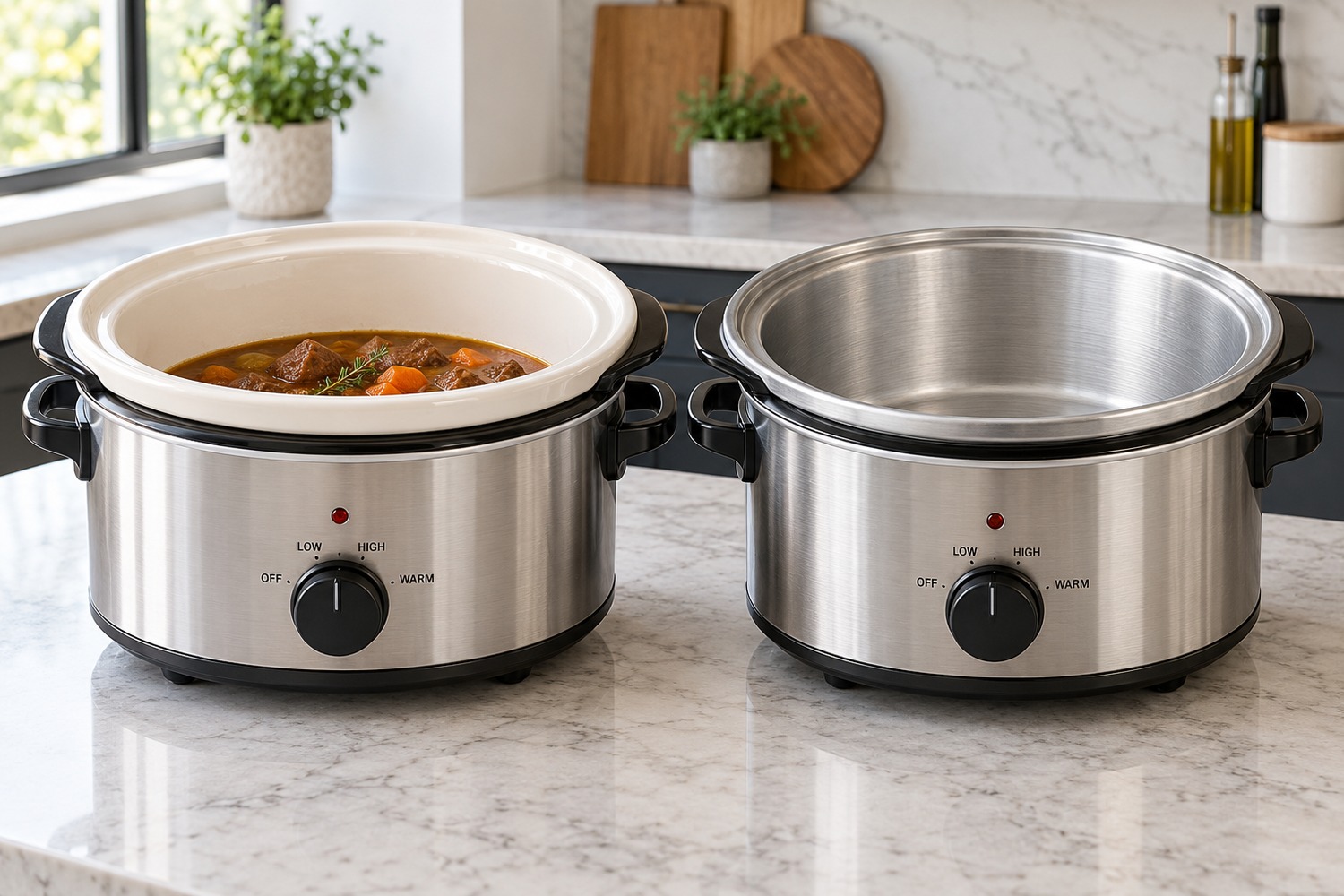
Choosing between a ceramic vs aluminium slow cooker is primarily about the removable cooking pot: its weight, whether you can brown ingredients in it and how it behaves in everyday cleaning. Ceramic or stoneware inserts are familiar for straightforward slow cooking, while aluminium inserts can be lighter and, on some models, suitable for searing food on the hob. Neither material automatically makes tastier stews.
The right choice depends on what you cook and how you use the appliance. Someone who simply loads a casserole before work may appreciate traditional ceramic. Someone who browns onions, mince and beef first might value a metal insert approved for hob use. This guide explains the differences without claiming we’ve personally tested particular models.
At a glance: ceramic and aluminium inserts compared
| Feature | Ceramic / stoneware | Aluminium |
|---|---|---|
| Weight | Usually heavier | Often lighter |
| Hob searing | Generally unsuitable without explicit approval | Possible on compatible models |
| Cooking surface | Usually glazed stoneware | Often non-stick coated |
| Cleaning | Depends on the glaze and instructions | Depends on coating and instructions |
| Potential damage | Chips, cracks, thermal shock | Scratches, coating wear, dents |
| Cooking results | Suitable for gentle, moist cooking | Also suitable for gentle, moist cooking |
These are common characteristics, not universal rules. Oven-safe stoneware, hob-safe aluminium and special coatings are model-specific. Always read the exact manufacturer manual before putting any insert onto another heat source.
What does ceramic mean in a slow cooker?
A ceramic slow cooker generally uses a removable, relatively thick glazed stoneware bowl inside an electrical heating base. The bowl holds the food as gentle heat cooks soups, curries, casseroles and braised meat over several hours. Stoneware retains heat and makes a familiar serving vessel.
One drawback is weight. A stoneware bowl holding several litres of stew can be heavy to lift or wash. It may also chip if knocked and crack if subjected to abrupt temperature changes, so a hot bowl shouldn’t be placed into very cold water unless the manufacturer allows it.
What does aluminium mean in a slow cooker?
An aluminium slow cooker has a removable metal cooking pot rather than a traditional stoneware bowl. Metal construction often makes it lighter. Some inserts are coated to provide a non-stick cooking surface, while particular models have a hob-safe insert for browning ingredients first.
However, not every aluminium insert can go on the hob. Ordinary aluminium is not automatically compatible with induction, which typically requires a suitable magnetic base. Even if a product advertises hob-searing, check precisely which gas, ceramic, electric or induction hobs the manufacturer approves.
Ceramic vs aluminium slow cooker: the main everyday differences
For uncomplicated meals where everything goes straight into the cooker, ceramic may provide all the functionality you need. For recipes where you routinely sear meat or soften onions, a hob-safe aluminium insert may save washing a separate frying pan. The convenience benefit comes from the approved construction of that exact insert, not from aluminium being universally better.
Capacity matters just as much as the material. A large oval pot can fit bulky joints more comfortably than a round one, but only when its internal dimensions and filling limits suit the food. Choose according to your usual recipes rather than assuming one material has greater capacity.
Can you brown meat directly in the slow cooker insert?
Some aluminium inserts are designed so you can brown meat in the removable pot on a suitable hob, then transfer it to the electrical base for slow cooking. This can be convenient when preparing casseroles, chilli or beef stew. Browning also adds flavour, although you can achieve the same step in a separate frying pan before transferring food to a ceramic insert.
Do not put conventional ceramic stoneware directly on a flame or cooking zone unless the manufacturer explicitly allows it. The sudden, concentrated heat can cause unsuitable stoneware to crack. Similarly, do not assume an aluminium bowl is hob-safe based purely on its appearance.
Which material is lighter and easier to lift?
Aluminium usually wins on weight. That can matter when you’re moving a removable pot from the cooker to a serving surface or sink. A large stoneware insert may already be substantial before the ingredients go in.
Still, a light metal pot filled with hot food is heavy and can burn you. Use suitable oven gloves, keep the route clear and avoid unnecessary lifting. If you regularly feed larger households, see our slow cooker guide for a family of four and size guide for five adults for capacity considerations.
Which material is easier to clean?
Both can be convenient when cared for correctly. Glazed stoneware often cleans well after soaking; a good non-stick metal finish can help food release without much scrubbing. But neither material guarantees dishwasher compatibility. What matters is the insert’s specific finish and the manufacturer’s cleaning instructions.
UK charity Electrical Safety First provides slow-cooker safety guidance, including the importance of manufacturer instructions and cleaning safely. Unplug the appliance before dismantling it, and never immerse the electrical heating base in water.
With non-stick aluminium, avoid harsh abrasives and use utensils recommended for the coating. Ceramic can also be damaged by impacts or abrasive cleaning. Replacing a removable insert may be possible if spare parts remain available.
Which lasts longer: ceramic or aluminium?
There’s no guaranteed winner. Ceramic or stoneware can last for years but may chip or crack if mishandled. Aluminium won’t shatter in the same way, though a coated surface may scratch, wear or eventually need replacement. A damaged coating deserves attention rather than being ignored.
Before choosing either type, check the availability of replacement inserts. A cracked bowl or unusable coating can render an otherwise functioning cooker inconvenient to keep. The ability to buy a replacement pot can matter more to long-term value than a small difference in original price.
Are aluminium slow cookers safe for acidic foods?
Distinguish between bare aluminium and a suitable coated food-contact surface. Acidic ingredients, including tomatoes and vinegar, may interact differently with exposed aluminium and finished coated cookware. Manufacturer instructions for the particular pot should guide your choice.
The UK government’s general information on aluminium states that low-level exposure from correct use of aluminium cookware would not be expected to cause adverse health effects. That doesn’t mean a damaged insert or unapproved cooking method should be used without checking the manufacturer’s recommendations.
There’s no sound basis for claiming every aluminium slow cooker is unsafe. Choose food-contact cookware made for your intended recipes, keep coatings in good condition and seek replacement advice for badly damaged inserts.
Does ceramic make slow-cooked food taste better?
There isn’t a reliable general rule that ceramic inserts make food taste better. Recipe formulation, seasoning, ingredient quality and cooking time play much bigger roles. Some aluminium inserts make browning especially convenient, but a ceramic cooker can use ingredients browned separately.
For a tender casserole, the slow cooker’s heating behaviour and the cut of meat often influence the result more than the pot material. Follow reliable recipe timings, avoid overcrowding and don’t assume leaving food on longer will automatically improve it.
Does insert material affect electricity use?
The material alone doesn’t determine the running cost. Wattage, insulation, thermostat behaviour, recipe volume, cooking setting and duration all contribute to energy usage. A metal insert may conduct heat differently, but that doesn’t prove the completed meal will cost less in electricity.
For detailed calculations, see our slow cooker running-cost guide. Our slow cooker versus electric oven comparison also explains why actual kilowatt-hours per finished meal are more useful than a rated wattage figure.
Which slow cooker is better for beef or gammon joints – ceramic or aluminium?
For a large joint, bowl shape can be more important than ceramic versus aluminium. A long oval bowl may accommodate a 2kg cut more comfortably than a deep round one, even at a similar litre capacity. Compare the interior dimensions, allow the lid to close fully and respect the maximum fill guidance.
Our guide to slow cookers for a 2kg beef joint and guide for a 2kg gammon joint explain why joint shape matters when choosing an appliance.
What about vegetarian meals and batch cooking?
Both materials suit soups, stews and many vegetable dishes. A hob-safe aluminium pot may be helpful if you sauté onions and spices at the start. A ceramic insert can be straightforward for a lentil or vegetable casserole where the ingredients are prepared and added together.
Choose the right capacity as well. Our guide to sizes commonly used in slow cooker recipes provides useful context, while our vegetarian slow cooker guide explores which foods work especially well.
What to check in a slow cooker before buying
- Exact bowl construction: glazed stoneware, coated aluminium or another material.
- Hob compatibility: check written approval for your actual hob type.
- Oven suitability: check whether the removable insert is oven-safe and its temperature limit.
- Weight: imagine lifting a full pot to serve or wash.
- Capacity and shape: look at usable filling limits and internal dimensions.
- Cleaning guidance: verify dishwasher suitability and permitted utensils.
- Replacement parts: consider how easy it is to replace a damaged insert.
- Controls: decide whether you need a timer or an automatic keep-warm function.
If automatic settings matter, our programmable slow cooker comparison explains those features. You can examine products on Amazon UK or other shops without assuming that an attractive listing guarantees hob compatibility or a particular coating.
Frequently asked questions
Are ceramic slow cookers better than aluminium?
Not universally. Ceramic is a familiar choice for hands-off cooking; aluminium can offer a lighter removable pot and, on approved models, hob-searing convenience. The best option depends on your routine.
Can you put a ceramic slow cooker insert on a gas hob?
Usually not. Only do so if the exact manufacturer expressly permits it. Direct heat can damage unsuitable stoneware.
Can aluminium slow cooker pots go on induction hobs?
Only when designed for induction, typically with a compatible magnetic base. Aluminium alone doesn’t guarantee induction compatibility.
Are aluminium slow cooker pots always non-stick?
No. Many have a non-stick coating, but construction and finishes vary. Check the food-contact surface and manufacturer specifications.
Which insert is easier to wash?
It depends on the coating, weight and cleaning instructions. A lighter pot can be easier to handle, while glazed stoneware can also clean well with suitable care.
Can you put a slow cooker pot in the oven?
Some removable inserts are oven-safe and others aren’t. Follow the model’s written instructions and any temperature limit.
The verdict
In a ceramic vs aluminium slow cooker comparison, ceramic stoneware is a dependable choice for uncomplicated slow cooking. Aluminium becomes especially attractive when you value a lighter insert and an approved hob-searing feature. Neither guarantees superior flavour or lower electricity bills simply because of the material.
When weighing up a ceramic vs aluminium slow cooker, choose according to the exact insert design, coating, your usual recipe quantities and the manufacturer’s instructions. Those details are much more useful than blanket claims that one material always wins.
Editorial note: This article provides general guidance, not personal product-test results. Coatings, materials and permitted cooking methods vary by manufacturer.