
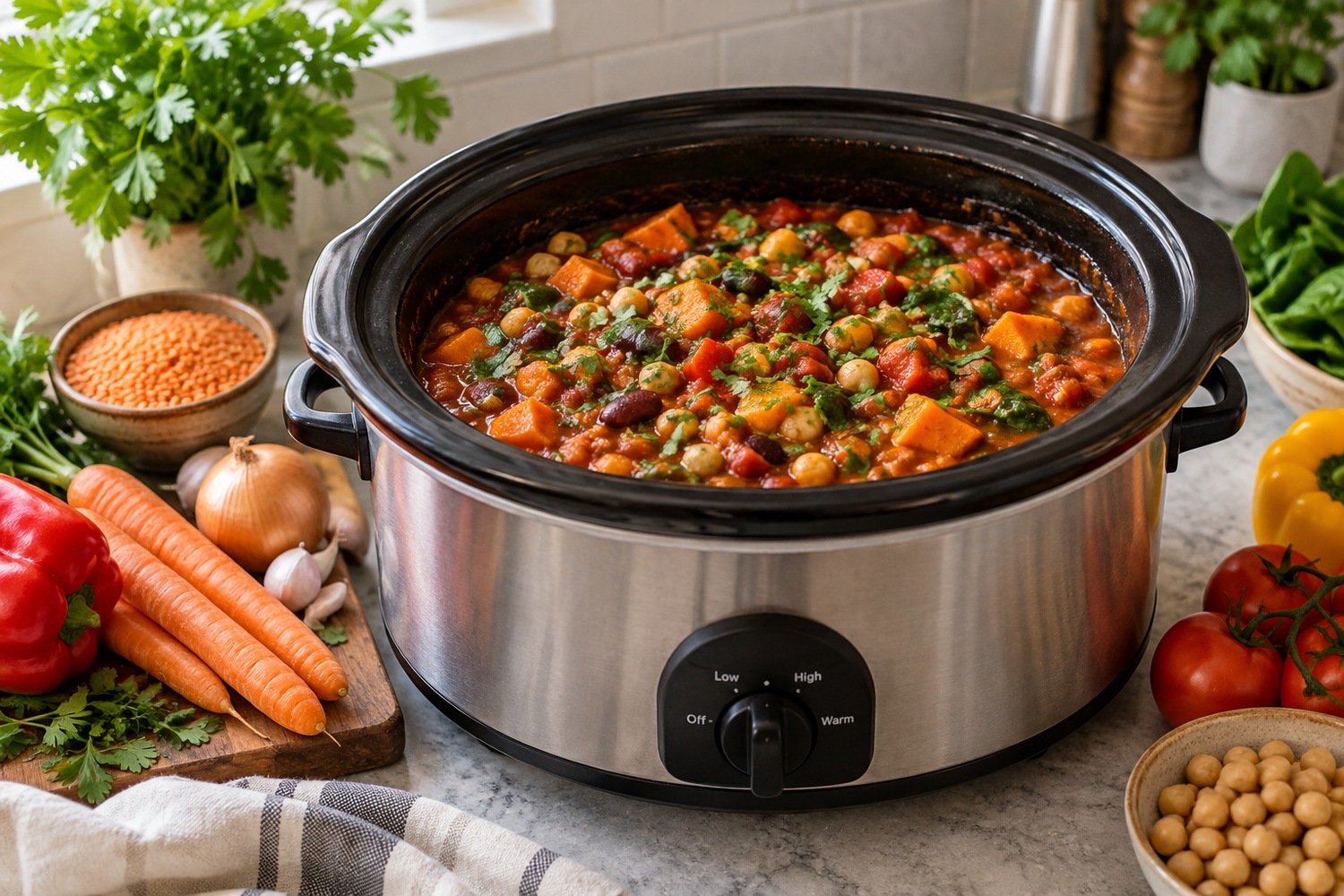
If most of your meals are meat-free, you might be asking: are slow cookers worth it for vegetarians, or would a saucepan do the same job more quickly? For people who regularly eat lentil stews, vegetable curries, chilli and soups, a slow cooker can be genuinely useful. It lets you cook a pot of dinner with little attention and makes batch cooking convenient. But it isn’t the best tool for every vegetarian dish, and it won’t automatically make your meals cheaper.
The real decision is whether you cook enough dishes that benefit from long, gentle heat. If most of your dinners are stir-fried vegetables, pasta or quick tofu dishes, you might get more use from a good frying pan. If you like coming home to a ready-made lentil dhal or vegetable casserole, a compact slow cooker could earn its cupboard space.
So, are slow cookers worth it for vegetarians?
Yes, especially for batch cooking soups, curries, chilli and slow-simmered pulses that are already safe to cook in the appliance. Most of those meals are easy to make in several portions, which can be refrigerated or frozen for later. You don’t need meat to make a slow cooker useful.
The limitation is texture. Delicate vegetables, quick-cooking greens and foods you want to remain crisp often suffer after hours of cooking. Buying a slow cooker makes sense when you have a few meals you’ll prepare regularly, not just one recipe you happen to like.
What vegetarian meals work best in a slow cooker?
| Dish | Slow cooker suitability | Practical tip |
|---|---|---|
| Lentil and vegetable soup | Very good | Use enough liquid and follow a tested recipe |
| Chickpea and tomato curry | Very good with canned, cooked chickpeas | Stir in fresh herbs at the end |
| Vegetarian chilli | Very good with canned, cooked beans | Add peppers later if you prefer some bite |
| Root-vegetable stew | Good | Cut pieces consistently for even cooking |
| Vegetable dhal | Good with a suitable recipe | Different lentils need different liquid and cooking times |
| Broccoli and leafy greens | Better added near the end | Avoid cooking them for the entire session |
| Stir-fried tofu and vegetables | Usually better on the hob | A frying pan gives better browning and texture |
For an uncomplicated first meal, choose a published slow-cooker recipe designed for vegetables and cooked canned pulses. Follow its quantities and timings instead of dividing an ordinary hob recipe by guesswork.
The important warning about dried kidney beans
Never cook raw, dried kidney beans directly in a slow cooker. They contain a naturally occurring lectin that requires adequate high-temperature cooking. Slow cookers may not reach the temperature needed to make raw kidney beans safe, even after many hours.
Health Canada’s guidance on lectins in dry legumes says to soak dried red kidney beans, discard the soaking water and boil them vigorously for at least 10 minutes before further cooking. It also states that slow cookers should not be used to cook dried red kidney beans from raw. For a convenient slow-cooker chilli, choose canned kidney beans that have already been properly cooked.
Other dried legumes have different preparation requirements. Don’t assume all dried beans are safe with the same method, and consult authoritative preparation guidance for the ingredient you’re using. This is particularly important if you tend to buy dried beans in bulk.
Is a slow cooker good for lentils?
Often, yes. Lentils are one of the strongest reasons a vegetarian might buy a slow cooker because they feature in thick soups, stews and dhal. Red split lentils tend to soften and break down into a creamy texture; green or brown lentils usually hold their shape better when properly cooked.
The quantities of liquid and cooking times will vary by type and recipe. Salt, acidic tomato ingredients and the age of dried pulses can influence texture, so follow a recipe tested for a slow cooker. Don’t use a general bean-cooking time as a substitute for instructions specific to the lentils you’re preparing.
Does slow cooking make vegetarian food healthier?
A slow cooker doesn’t automatically make a meal healthy, but it can make it more convenient to prepare food with vegetables, pulses and wholefood ingredients. The NHS vegetarian diet guide highlights beans, peas and lentils as useful sources of protein and fibre, alongside the importance of eating a varied, balanced diet.
Pay attention to what goes into the pot. A lentil soup rich in vegetables is different from a meal packed with salt, cream or cheese. Vegetarian and vegan diets also need suitable sources of nutrients such as iron and vitamin B12; cooking everything in one appliance won’t solve nutritional gaps.
Can a slow cooker save vegetarians money?
It can help you make inexpensive ingredients stretch across several meals. Dried lentils, root vegetables, tomatoes and canned pulses are useful starting points, and cooked meals can be portioned for the fridge or freezer.
However, cooking for hours uses electricity, and the total cost depends on the model, tariff and how much food you prepare. A quick lentil soup made on a hob might be just as economical, while one large slow-cooked batch could save effort compared with preparing several separate dinners.
If you’re mainly trying to reduce shopping costs, focus on meals you’ll actually eat rather than assuming every slow-cooker recipe is cheaper. Freezing spare portions is only valuable if you use them.
What size slow cooker should a vegetarian buy?
For one person or a couple, around 1.5–3.5 litres may be enough for small pots of soup or curry, depending on how many portions you want. For a larger household or regular batch cooking, 3.5–5 litres is a reasonable range to compare.
A slow cooker must be filled within the range specified in its instruction booklet. Capacity in litres doesn’t tell you precisely how many servings a recipe makes, particularly when bulky vegetables take up space before softening.
| Household or routine | Capacity to compare | Why |
|---|---|---|
| One person, small batches | 1.5–2 litres | Compact storage and modest recipes |
| One or two people who freeze portions | 2.5–3.5 litres | More room for leftovers |
| Family meals | 3.5–5 litres | Space for more vegetables and portions |
| Large-batch cooking | 5 litres or more | Useful if you routinely fill it properly |
For a fuller comparison of household capacities, see our slow cooker size guide for a family of four. If you sometimes cook large ingredients for non-vegetarian guests, our guide to a slow cooker for a 2kg gammon joint shows why the shape of the pot matters as well as its litre rating.
Which slow cooker features matter most for vegetarian meals?
A removable cooking pot is handy because tomato-based curries and lentil stews can leave residue around the edges. Simple low and high settings cover many recipes, and a keep-warm function can be useful when you serve dinner at different times — as long as it’s used according to the manufacturer’s food-safety instructions.
A sauté function can be convenient if you want to brown onions or toast spices without washing an extra saucepan. But it’s not essential: you can cook aromatics separately on the hob, or follow a recipe that doesn’t require pre-frying.
Check the weight, storage dimensions, cleaning instructions and whether the pot is dishwasher-safe. Don’t pay extra for elaborate programmes you’ll rarely use.
Where to buy a slow cooker for vegetarian meals
If you mainly cook soups and curries for one or two people, compare 3.5-litre slow cookers on Amazon UK. For small households and limited cupboard space, browse compact 2-litre models. If you want to brown vegetables before slow cooking, you can look at slow cookers with a sauté function.
These are general Amazon UK shopping searches, not recommendations based on testing. Check each product’s actual capacity, fill limits, included functions, seller information and current price before buying. You can often find useful models well under £100.
When a slow cooker isn’t the right appliance
If your favourite vegetarian meals are quick pasta dishes, crispy tofu, stir-fried vegetables or pan-fried halloumi, a slow cooker probably won’t improve them. A frying pan, saucepan or oven can give you the textures and cooking times you want.
A slow cooker also won’t conveniently rescue you when you suddenly decide what to eat at 7pm and need dinner in fifteen minutes. It rewards a little planning — preparing the ingredients in advance or putting a batch on earlier in the day.
How to prevent mushy vegetables
Choose vegetables according to the recipe and cut pieces consistently. Root vegetables such as carrots, parsnips and potatoes generally stand up better to extended cooking than courgettes, spinach and other delicate ingredients.
Add quick-cooking vegetables, herbs and certain dairy ingredients towards the end if the recipe recommends it. Keep the lid closed for the required cooking period rather than lifting it repeatedly to check progress. And don’t leave the pot running longer than necessary just because slow cooking sounds forgiving.
Frequently asked questions
Can you make vegetarian chilli in a slow cooker?
Yes. It’s a good batch-cooking option using vegetables, tomatoes, spices and safely cooked canned beans. Don’t put raw dried kidney beans straight into a slow cooker.
Are slow cookers worth it for vegans too?
Yes, for many of the same dishes: lentil dhal, soups, chickpea curries and vegetable stews. Use plant-based ingredients and check recipes for any dairy, honey or other non-vegan additions.
Is it better to use canned beans or dried beans in a slow cooker?
Canned, pre-cooked beans are often the simpler and safer option for slow-cooker recipes, especially kidney beans. If using dried legumes, follow ingredient-specific safe preparation instructions before slow cooking.
Will a slow cooker overcook vegetables?
It can. Tender vegetables can become too soft after hours in the pot. Choose appropriate ingredients and use recipe-specific timing, adding delicate vegetables later where advised.
Should I buy a slow cooker or a pressure cooker for vegetarian cooking?
Choose a slow cooker if you prefer largely hands-off cooking over several hours. A pressure cooker may suit you better if speed is important, but you’ll need to follow the specific pressure-cooking guidance for beans and other dried legumes.
Is a 3.5-litre slow cooker big enough for vegetarian batch cooking?
It can be, particularly for a small household. The actual number of portions depends on the recipe, the size of the vegetables and the cooker’s permitted fill level.
The verdict
Slow cookers are worth it for vegetarians who regularly make soups, lentil dishes, vegetable curries, chilli and other meals that improve with gentle cooking. They’re especially useful for batch cooking and reducing hands-on effort. If you mainly make fast meals with crisp vegetables, however, you’ll probably get more use from your hob and frying pan. Buy a size you’ll genuinely fill, and be careful to prepare dried beans safely.
Affiliate disclosure: Progressive Housewares may earn a commission from qualifying purchases through Amazon UK links at no extra cost to you. We haven’t tested the products linked in this article.