
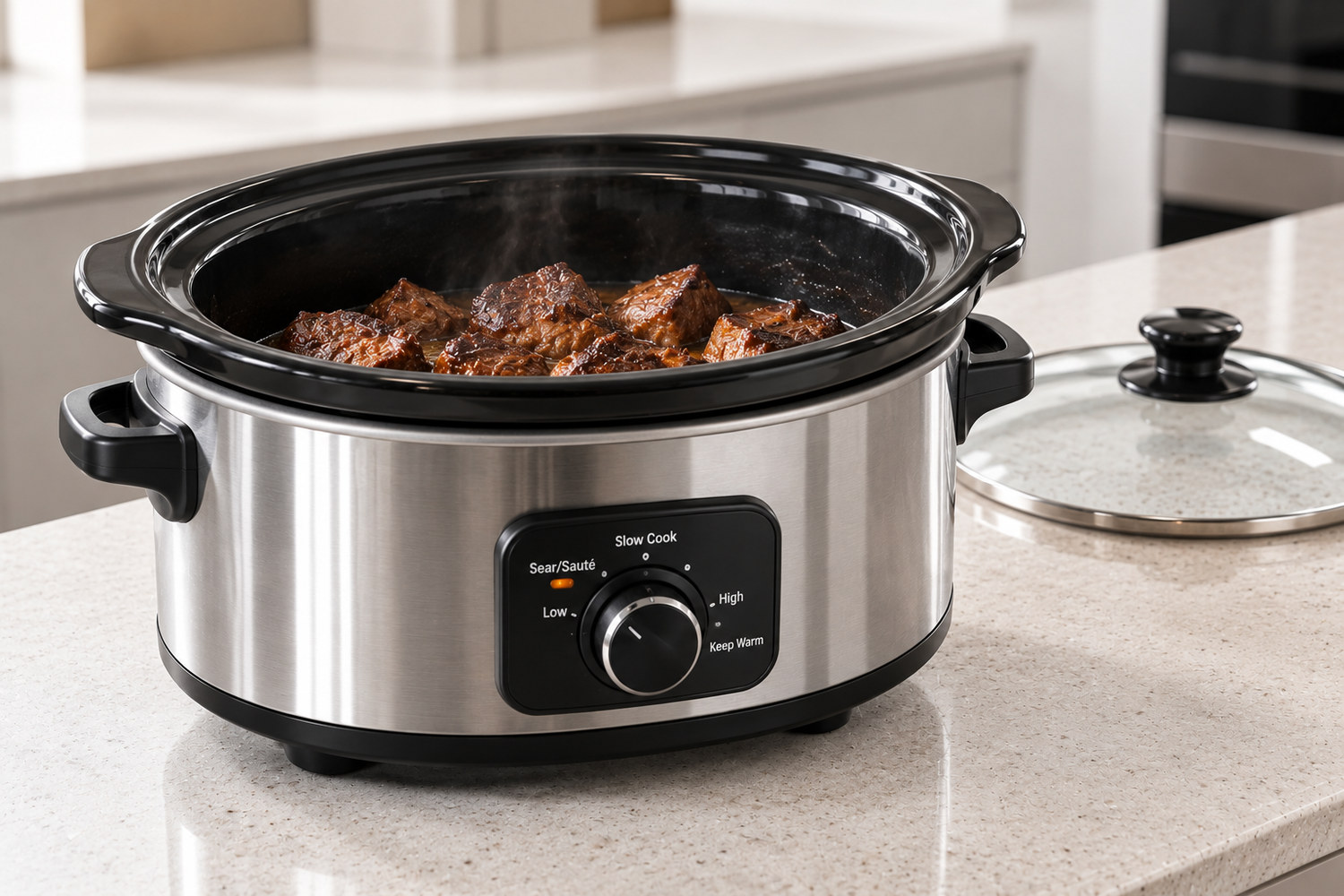
Slow cooker with a sear function UK: is it worth paying extra for one? If you regularly brown beef, onions or chicken before slow cooking, a sear-capable model can save you a saucepan and some washing-up. But the phrase covers two different designs: a cooker with an electric Sear/Sauté setting, and one with a removable pot that you brown ingredients in on the hob. They are not interchangeable.
For someone who mainly prepares soups or simple dump-and-go dinners, a conventional slow cooker may offer better value. This guide compares the options for UK kitchens, explains what searing actually contributes and helps you decide whether the extra feature suits your cooking.
What Does a Sear Function on a Slow Cooker Do?
Searing uses relatively high heat to brown the surface of meat or vegetables before a long, gentle cook. Browning produces roasted, savoury flavours through chemical reactions at the food’s surface, while softened onions and tomato paste can add depth to a stew. A slow cooker’s ordinary Low and High settings typically do not achieve the same rapid surface browning as a hot pan.
Some appliances supply a dedicated electric Sear or Sauté mode: you brown directly inside the cooking vessel while it remains in the powered base, then switch to Slow Cook. Others provide a hob-safe removable metal pot; you brown on a suitable hob, return the pot to the cooker and continue the recipe. Check the precise product description before buying.
Can You Sear Things in a Slow Cooker?
Yes, but only when your model explicitly supports it. A dedicated Sear/Sauté setting may allow browning in the cooker itself. Alternatively, a specially designed hob-safe insert can be used on the hob if the manufacturer approves your hob type. You cannot assume that a traditional ceramic bowl is safe to put on a gas flame or electric hob.
The distinction is illustrated by BBC Good Food’s UK slow cooker testing, which discusses integrated sear settings and hob-safe pots separately. A product advertised as ‘sear and stew’ may still require a hob rather than providing a high-heat electric mode.
Never put an ordinary slow cooker ceramic crock on a hob without explicit approval. Avoid exposing heated ceramic or glass to sudden cold water too, as temperature shock can cause cracking.
Slow Cooker With a Sear Function UK: Is the Extra Feature Useful?
The biggest advantage is a smoother workflow. When a recipe asks you to brown meat and sauté aromatics first, you can use fewer vessels and retain the browned residue in the same cooking pot. After adding stock or other liquid, gently scrape up the flavoursome browned bits with a utensil suitable for the insert’s surface.
This is particularly useful for beef stews, chilli, braised lamb and some curries. However, a feature that saves washing-up does not necessarily save cooking time. You still need to prepare ingredients and allow the sear surface to heat up, and meat may need browning in batches.
Our UK slow cooker buying guide covers how the feature fits alongside capacity, controls and everyday usability.
Are Searing Slow Cookers Worth It?
They can be worth it if you sear ingredients several times a week and dislike washing a separate frying pan. The benefit is convenience rather than an automatic improvement in every slow-cooked meal. A basic cooker plus an existing frying pan may deliver similarly good results when you have room for both.
UK consumer guidance from Which? on common slow cooker recipe mistakes recommends browning meat and vegetables to build flavour, and notes that a hob-safe sear-and-stew pot can reduce washing-up. This supports the value of browning; it does not mean every cook needs a specialised machine.
Consider the trade-offs: a heavier or more complicated appliance, potentially higher upfront cost, additional cleaning instructions and more space on the counter. If you rarely brown food before cooking, you may pay for a feature you seldom use.
Should I Buy a Slow Cooker With a Searing Option?
Ask yourself how you actually cook. If your weekly menu includes beef casserole, pulled pork, onion-rich chilli and lamb curry, the ability to brown first can be useful. If you mostly make porridge, dhal, soups or vegetable stews with little pre-frying, a straightforward Low/High model could be enough.
A useful checklist is whether the searing function is truly built in, whether the pot works on your specific hob, whether it handles the quantity you usually cook and whether the insert is easy to lift and wash. For a searing model with a removable aluminium insert, see our ceramic versus aluminium slow cooker comparison.
What Is the Difference Between Sear/Sauté and a Hob-Safe Pot?
An integrated Sear/Sauté function heats the insert while it sits inside the electric appliance. It can work in a kitchen without using the hob, which may be handy when hob space is limited. But the base may become very hot, and you need to follow its temperature and utensil instructions.
A hob-safe insert has no special searing electronics: you take the removable bowl to the hob to brown, then return it to the slow cooker for the long cooking stage. It may be lighter than a stoneware bowl, but not every hob-safe insert works with induction. Check the permitted heat source, coating and maximum heat setting.
A third possibility is a multicooker that combines searing, pressure cooking, steaming and slow cooking. It gives broader versatility but might have a larger footprint or more complicated controls than a dedicated slow cooker.
Does Searing Meat Make Slow Cooker Food Taste Better?
Often, yes. Browning develops a richer flavour on the surface of meat and creates savoury fond in the pan. Sautéing onions and spices beforehand can also make the finished sauce more rounded. That said, browned meat is not essential in every slow cooker recipe: many soups, bean dishes and mild curries can taste excellent without it.
For the best results, pat meat dry, preheat the sear surface according to the manual and avoid crowding the pot. Brown in batches if necessary. Add the recipe’s liquid after searing to loosen browned residue, unless the manufacturer gives a different procedure. Never assume searing the surface cooks meat safely throughout; the subsequent recipe must finish the cooking.
Is a Small Slow Cooker With a Sear Function Suitable for a Family?
That depends more on usable capacity than on the sear function. A small cooker may suit two people or a modest meal, but it could require multiple batches of browning and be too small for a family dinner with leftovers. The exact number of portions depends on appetites and whether the dish includes vegetables, rice or side dishes.
If you are cooking for four or five adults regularly, examine the manufacturer’s recommended working capacity and actual internal dimensions. Our slow cooker size guide for five adults offers a practical comparison. A model with a brilliant searing mode is still inconvenient if it cannot hold dinner.
Can You Sear a Whole Joint in a Slow Cooker?
Sometimes, provided the joint fits the pot, there is enough contact with the heated surface and the sear setting is suitable. Long beef or pork joints may be awkward to turn in a compact round insert. A larger oval vessel may offer better clearance, although the heating surface and dimensions matter more than the outline alone.
You can also brown a large joint in a separate pan and finish it in an ordinary slow cooker. For fitting substantial cuts, see our guide to slow cooker size for a 2kg beef joint and our oval versus round slow cooker comparison.
Are Sear-Function Slow Cookers Harder to Clean?
A single-pot process may create fewer dirty pans, but high-heat browning can leave stubborn residue on the insert. Non-stick aluminium requires gentle utensils and cleaning tools. Stoneware, stainless steel and coated metal differ, and dishwasher suitability varies by model.
Allow the pot to cool before washing and follow its care instructions. Do not immerse the powered base, put a hob-unsafe insert on a burner or assume the lid is oven-safe. The UK instructions for Lakeland’s searing slow cooker provide a useful example of a model whose pot must not be used on any hob: proof that searing features need model-specific handling.
Does a Sear Function Use More Electricity?
The searing phase uses high heat for a relatively short period, while slow cooking applies lower heat over several hours. Total electricity consumption depends on the device’s wattage, how long you sear and the slow-cooking programme. It is misleading to compare wattage labels alone without accounting for operating time.
A separate hob may also use energy to brown food, so integrated searing is not automatically more expensive or cheaper. For a broader explanation of energy use, read our UK slow cooker electricity guide.
Frequently Asked Questions
Do You Have to Sear Meat Before Slow Cooking?
No. Many recipes work without browning, although searing can improve flavour in meat-based stews and casseroles. Follow the recipe rather than treating it as a safety substitute for thorough cooking.
Can You Sauté Onions in a Searing Slow Cooker?
Yes, if its integrated Sear/Sauté setting permits it, or its removable pot is approved for the hob. Stir with suitable utensils and follow any temperature restrictions for non-stick coatings.
Can You Use a Searing Slow Cooker on an Induction Hob?
Only if the particular removable insert is explicitly induction compatible. Many hob-safe aluminium inserts do not support induction, and an integrated electric sear function does not mean the insert can go on a hob.
Is a Multicooker Better Than a Slow Cooker With Searing?
A multicooker can offer more cooking methods, but may cost more, occupy more space and need extra familiarity. Choose based on the features you will use regularly rather than the longest function list.
Final Verdict: Is a Slow Cooker With a Sear Function UK Worth Buying?
A slow cooker with a sear function UK can be worthwhile when you frequently brown meat and vegetables before simmering them for hours. It streamlines cooking and may reduce washing-up, but it is not necessary for great soups, stews or curries. Check whether searing happens electrically or on the hob, confirm your cookware and hob compatibility, and prioritise the right capacity over novelty.