
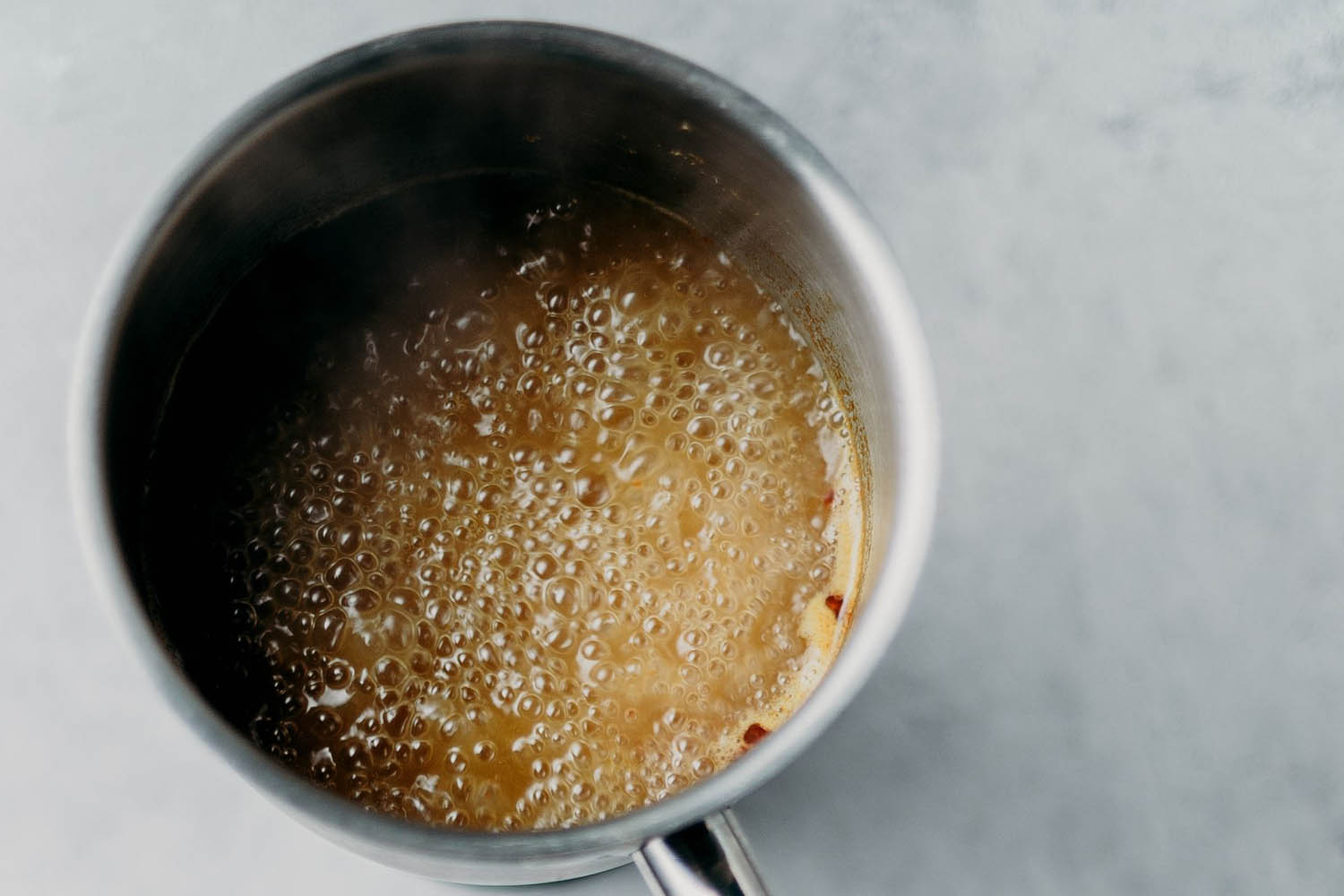
A heavy-based, uncoated stainless steel saucepan is the best all-round choice for making caramel at home. It heats steadily, lets you see when the sugar changes from pale gold to amber, and is generally easier to judge than a dark non-stick pan. You don’t need an expensive specialist caramel pot: a well-made stainless steel saucepan in the £25–£70 range is a sensible place to start.
That doesn’t mean caramel will fail in aluminium, copper or non-stick cookware. It means stainless steel offers a useful balance of control, visibility, durability and price — especially if you’re buying one saucepan for caramel, sauces and everyday cooking.
Which saucepan material is best for caramel?
| Material | How it performs | Our verdict |
|---|---|---|
| Uncoated stainless steel, heavy base | Light interior makes browning easy to see; stable, practical construction | Best all-round option |
| Aluminium, preferably heavy-gauge | Responsive heating, but thin pans can develop hot spots | Good when well made |
| Copper | Very responsive to changes in heat; often expensive | Excellent but unnecessary for most home cooks |
| Non-stick | Can work within the coating’s temperature limits; dark interiors can obscure colour | Not first choice for dry caramel |
| Enamelled cast iron | Retains heat and can be heavy to manoeuvre | Usable, but less responsive |
The key isn’t that one metal magically prevents burning. Caramel is sensitive to heat and timing. A saucepan that heats evenly and makes the sugar’s colour easy to monitor gives you a better chance of stopping at the right point.
Why stainless steel is a good choice
An uncoated stainless steel interior usually has a silver-coloured surface, so you can see the caramel shift from clear or pale yellow to golden and then darker amber. That colour change matters: sugar can move from nicely caramelised to bitter very quickly.
Look for a substantial encapsulated base or a multi-ply construction with an aluminium core. Stainless steel alone isn’t especially conductive; the aluminium layer helps distribute heat across the cooking surface. A thin, inexpensive stainless steel pan can still heat unevenly, so don’t judge quality by the words ‘stainless steel’ alone.
A firm handle is helpful when swirling the pan gently. For batches where you add cream or butter, enough depth also matters because the mixture can bubble up vigorously.
Can you make caramel in a non-stick saucepan?
Yes, certain caramel recipes can be made in non-stick cookware, provided you follow the pan’s temperature and utensil restrictions. But for a dedicated caramel saucepan, I wouldn’t choose it first.
A black or dark non-stick interior makes it harder to judge the precise colour of the sugar, especially during dry caramel making. More importantly, never assume non-stick coating is safe for the high temperatures involved in a particular recipe. Different coatings have different limits; overheated empty or nearly empty non-stick cookware can be damaged. Read the manufacturer’s instructions and don’t use a non-stick pan for a recipe that exceeds its permitted temperature.
You also don’t need a non-stick coating to clean caramel off a pan. Hardened sugar will generally dissolve in warm water, so the cleaning advantage is smaller than you might expect.
Is copper better than stainless steel for caramel?
Copper responds quickly when you increase or lower the heat, which is useful for delicate sugar work. It’s popular in professional confectionery, but quality copper saucepans can cost far more than your everyday kitchen budget, and some need specialist care.
For someone making caramel sauce occasionally, the price difference is unlikely to be worthwhile. A solid stainless steel pan is usually more versatile and easier to live with.
What size saucepan should you use for caramel?
For typical home recipes, a medium saucepan of roughly 16–20cm diameter and about 1.5–3 litres capacity is a practical starting range. The right size depends on the amount of sugar and whether you’ll add cream, water or butter.
A very wide pan can spread a tiny quantity of sugar into a thin layer that heats quickly. A very small pan may be too cramped when hot caramel foams after other ingredients are added. Choose a saucepan large enough for the mixture to bubble safely without approaching the rim.
For a small batch of dry caramel, the sugar should cover the base relatively evenly. For a caramel sauce with cream, allow generous headroom rather than trying to fill the pan. Use your recipe’s specific pan instructions whenever they’re provided.
Does a thick base really matter?
Yes, particularly when using a domestic hob with hot spots. A heavier, well-constructed base helps spread the energy across the surface more evenly, reducing the risk that sugar at one edge darkens long before sugar elsewhere has melted.
You don’t need the heaviest saucepan available, but avoid flimsy, thin-bottomed pans if caramel is something you make regularly. ‘Heavy-based’ is more useful when backed by a clear description of the construction — such as an encapsulated aluminium core — rather than simply appearing as marketing text.
What if you have an induction hob?
Check the saucepan is specifically marked induction compatible. Many stainless steel pans have a magnetic base suitable for induction, but not every stainless steel alloy or construction works on induction.
The base also needs to suit your hob’s cooking zone and any minimum pan-size requirements. A small saucepan that works on gas might not be detected reliably on a large induction ring. Look for the induction symbol and check your hob manual if you’re unsure.
Is a milk pan suitable for making caramel?
A milk pan can work for very small quantities if it’s made of a suitable material and has enough free space above the mixture. But some milk pans have thin bottoms, and narrow pans can become awkward when adding cream to hot sugar.
If you’re buying a pan specifically for caramel sauce, a more conventional heavy-based saucepan is often more versatile than an extremely small milk pan.
Should a caramel saucepan have a pouring lip?
A pouring lip can make it easier to transfer warm sauce to a jug or jar, but it’s a useful extra rather than an essential feature. A comfortable, secure handle and appropriate depth matter more for safe handling.
If you regularly pour sauce into small jars, a pouring lip or a pan with a convenient spout may be worthwhile. Check whether the saucepan has a stable base and whether the handle stays comfortable in use; never pour bubbling hot caramel carelessly.
Dry caramel versus wet caramel: does the pan change?
Dry caramel starts by heating sugar without added water. A light-coloured saucepan is especially helpful because you need to see when individual patches melt and brown. A solid base and moderate heat help you manage the process.
Wet caramel begins with sugar and water. This can make the initial heating more even, although crystallisation and boiling still need care. A stainless steel pan works well for both methods.
Whichever method you follow, use the recipe’s stirring or swirling instructions. Avoid splashing sugar solution up the sides of the pan, and don’t scrape hardened crystals back into the syrup if the recipe warns against doing so.
How to avoid burning caramel in any saucepan
- Use the right pan size. Spread the sugar evenly, with enough headroom for bubbling.
- Start with moderate heat. High heat makes the colour change harder to manage.
- Watch the colour, not just the clock. Caramel can darken rapidly in the final moments.
- Prepare additions beforehand. Measure cream or butter before you start; you won’t want to search for ingredients while sugar is browning.
- Remove the pan promptly. The hot base can continue cooking the sugar after the heat is switched off.
- Keep hands and skin protected. Molten sugar can cause serious burns and remains very hot even when it looks calm.
When adding cream or other liquids, follow the recipe and expect vigorous bubbling and steam. Keep your face and hands clear, use appropriate oven gloves and keep children away from the hob.
What should you look for when buying a saucepan for caramel?
| Feature | What to look for |
|---|---|
| Interior | Uncoated, light-coloured stainless steel |
| Base | Encapsulated aluminium core or reliable multi-ply construction |
| Size | Typically 16–20cm for many home batches, subject to recipe |
| Capacity | Approximately 1.5–3L, with space for the mixture to foam |
| Handle | Secure, comfortable and easy to control when moving the pan |
| Hob compatibility | Explicit induction rating if you cook on induction |
| Price | Often possible to buy a useful pan for £25–£70 |
You can browse 18cm heavy-based stainless steel saucepans on Amazon UK or compare tri-ply stainless steel saucepans. If you have an induction hob, look at induction-compatible 18cm saucepans. These are shopping searches, not claims that we’ve tested particular products.
How do you clean burnt caramel from stainless steel?
Don’t scrape a hardened layer of sugar aggressively with a metal tool or pour cold water into a dangerously hot pan. Let the pan cool safely first. Then add warm water and allow the hardened sugar to dissolve. For stubborn residue, gently warming water in the pan — following its care instructions — can help loosen it.
This is one reason stainless steel is such a practical choice: you don’t need a non-stick coating to remove ordinary hardened sugar. If the pan has a decorative exterior, follow its cleaning instructions to avoid damaging the finish.
Frequently asked questions on What Type of Saucepan Is Best for Making Caramel
Can you make caramel in a stainless steel saucepan?
Yes. A heavy-based, uncoated stainless steel saucepan is one of the most practical choices because you can see the sugar browning and the pan is useful for other sauces too.
Is a non-stick pan better for caramel?
Not necessarily. Some non-stick pans can be used for suitable recipes, but the dark interior can hide colour changes and the coating has temperature limits. Check the manufacturer’s instructions.
What saucepan do pastry chefs use for caramel?
Professional cooks use various pans, including copper and heavy stainless steel, depending on the recipe and kitchen. Copper’s responsiveness can be useful, but it isn’t essential for home caramel.
Do you need a special caramel pan?
No. A well-constructed saucepan with a suitable base, depth and hob compatibility is enough for many home caramel recipes.
Can you use an aluminium saucepan for caramel?
Yes. Aluminium conducts heat well, but very thin pans may heat unevenly. A substantial pan is preferable, and you should follow the cookware’s care instructions.
Why does caramel keep burning around the edges of my pan?
Possible causes include uneven hob heat, a thin base or a batch that’s too small for the pan. Use a well-constructed saucepan, moderate heat and the technique specified in your recipe.
Bottom line
Buy a heavy-based, uncoated stainless steel saucepan if you want one dependable pan for caramel. A light interior helps you judge the colour, a substantial base helps spread heat, and a medium 16–20cm size is versatile for many home recipes. Copper can be excellent but is often expensive; non-stick is less useful when monitoring browning and may impose heat limits. Check the exact recipe, your hob compatibility and the pan’s care instructions before you buy.
Sources and further reading
Disclosure: Progressive Housewares may earn a commission from qualifying purchases through affiliate links, at no extra cost to you. We haven’t tested the products linked in this article.