
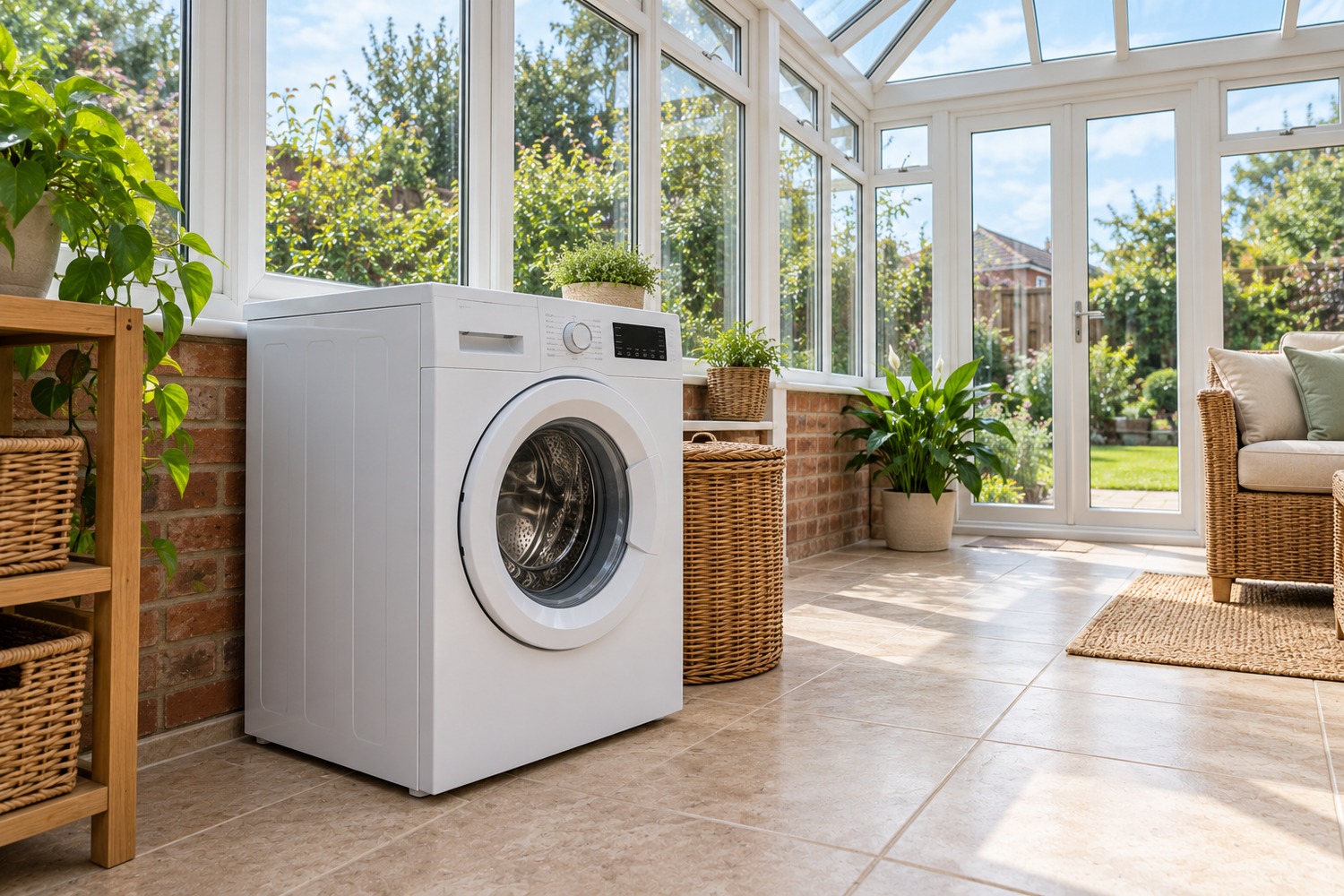
If you’re wondering whether can you put a washing machine in a conservatory – Yes, you may be able to put a washing machine in a conservatory, but the space needs suitable plumbing, drainage, electrics and temperatures throughout the year. The fact that a washing machine fits inside a conservatory doesn’t guarantee that the installation is suitable. Conservatories can become very cold in winter and extremely hot in summer, and adding permanent services can affect the building-regulations position.
If your plan is to reclaim space in a small kitchen, a conservatory utility area is worth exploring. Before moving the machine, though, check its installation manual and ask a qualified plumber and electrician about the work. If the project involves a new conservatory or alterations to an existing one, seek advice from your local building-control body too.
Quick checklist: is your conservatory suitable?
| Issue | What needs checking |
|---|---|
| Winter temperature | Will the room or exposed pipework fall below freezing? |
| Summer temperature | Does the appliance manual permit the room’s likely maximum temperature? |
| Water supply | Is there a properly installed connection and accessible isolating valve? |
| Drainage | Can wastewater reach the foul-water system with an approved arrangement? |
| Electrical installation | Is there a suitable protected socket and safe cable route? |
| Floor and access | Is the floor firm and level, with room to service the machine? |
| Building regulations | Will the new services or structural alterations affect the conservatory’s exemption? |
Will a washing machine work in a cold conservatory?
A conservatory that isn’t heated may drop close to outdoor temperatures in winter. This matters because water left inside the washing machine, its inlet hose or drain can freeze. Freezing can damage components or connections and lead to a leak once the weather warms up.
Don’t assume an appliance that stands unused is protected from frost. Some manufacturers specify minimum ambient temperatures or advise against installation where freezing may occur. Check the exact model’s installation instructions rather than relying on a general rule for all washing machines.
Pipework through an outside wall or along an unheated section is especially vulnerable. A qualified plumber can advise on routing and protecting services. Insulation may reduce heat loss, but it doesn’t guarantee a pipe cannot freeze during a prolonged cold spell.
What about conservatories that get very hot in summer?
A glazed conservatory can become considerably hotter than the rest of the house on a sunny day. High room temperatures may be outside the conditions intended for some appliances, and heat and direct sunlight can affect components or stored laundry products.
Use a room thermometer to understand how the space behaves during warm weather, then compare readings with the machine’s permitted operating conditions. Keep the washing machine away from direct heat sources where the manual requires it, and don’t build it into a tightly enclosed cupboard without the prescribed ventilation and service clearances.
Can you run washing-machine plumbing into a conservatory?
Potentially, yes. The machine needs an appropriate water supply and a wastewater connection; simply being close to the kitchen doesn’t establish that either can be extended safely.
A plumber should check the water connection, isolating valve, potential freezing risks, drain sizing and the permitted height and routing of the machine’s drain hose. Incorrect drainage arrangements can cause siphoning, overflowing or pumping problems. The appliance manual will give model-specific hose requirements.
Washing-machine wastewater belongs in the appropriate foul-water drainage system, not a rainwater downpipe. Don’t improvise a hose through a door or window and assume that discharging water outdoors is acceptable.
Will adding a washing machine affect conservatory building regulations?
It can, depending on what you’re doing and where you live. A conservatory is sometimes exempt from parts of the building regulations, but that depends on its design and the conditions for exemption. New plumbing, drainage, fixed electrics, heating or changes to the separation between the conservatory and house may require additional consideration.
In England, the Planning Portal explains that a conservatory’s usual exemption depends on conditions including size, separation from the house and heating arrangements. Government guidance also considers how subsequent work may affect an exempt conservatory.
Importantly, an exemption for the conservatory structure doesn’t mean all new services or building work are automatically exempt. Equally, putting a washing machine in a conservatory isn’t universally illegal. Ask your local building-control body about your particular project before paying for installation. Rules can differ across England, Wales, Scotland and Northern Ireland.
For a newly built conservatory, raise the utility-room idea at the design stage. For an existing conservatory, describe exactly what you’re adding or changing, including pipe routes and any proposed heating or electrical alterations.
Does an existing washing machine in a conservatory mean it’s approved?
Not necessarily. If you move into a home where the machine has been there for years, that doesn’t by itself confirm whether the work complied with the relevant requirements when it was done.
For example, homeowners have asked on the DIYnot forum about replacing a lean-to while keeping washing-machine plumbing, and on MyBuilder about moving the appliance to an existing conservatory. These discussions show that the distinction between a new installation and a long-standing arrangement causes confusion.
If you’re concerned about compliance before selling a house or carrying out alterations, ask building control or an appropriately qualified professional to review the actual installation and any available paperwork.
What electrical supply does a conservatory washing machine need?
Use an appropriately installed socket and follow the manufacturer’s instructions. Don’t run a long extension lead across the conservatory, pinch the cable beneath a door, or rely on a multi-way adaptor for a large appliance.
Conservatories may experience more pronounced temperature changes and condensation than other rooms. An electrician can assess the socket position, cable route and applicable protection requirements. New electrical work may need to comply with building regulations and the relevant wiring rules, even if the conservatory itself is otherwise exempt.
Is the conservatory floor suitable for a washing machine?
The machine needs a firm, stable and level base. A typical solid conservatory floor may be suitable, but check for uneven tiles, movement and drainage or damp problems. The appliance’s adjustable feet need proper support; a machine that rocks can make excessive noise during spinning.
Newly installed washing machines also need their transit bolts removed according to the manual. If the machine knocks or moves during spinning, check levelling, load balance and installation rather than assuming an anti-vibration mat will solve it.
Will putting a washing machine in a conservatory cause condensation?
A washing machine doesn’t ordinarily release large quantities of steam into the room during a normal wash, but laundry handling, leaks and indoor drying can add to local moisture problems. Conservatory glazing can also develop condensation when humid air meets cold surfaces.
If you’re planning to use the area for drying clothes as well, think about ventilation and humidity control. Avoid leaving wet laundry in a poorly ventilated, cold space where mould may develop. A hygrometer can help monitor conditions, but it won’t fix the source of persistent damp.
Can you put a tumble dryer in the conservatory too?
Possibly, but it needs a separate assessment. Vented dryers need a suitable route for exhaust air, while condenser and heat-pump dryers have their own temperature, ventilation and clearance requirements. A conservatory’s winter and summer conditions can matter to dryer performance as well.
If you’d like to stack a dryer above a washing machine to save space, use only a manufacturer-approved combination and stacking arrangement. Don’t stack a dryer on a washing machine simply because they have matching widths.
How to plan an installation
- Find the washing-machine manual. Check permitted room conditions, dimensions, plumbing requirements and electrical instructions.
- Measure the conservatory. Include appliance clearance, door opening, plug access and any surrounding cupboards.
- Assess temperatures. Think about winter frost and summer overheating, not just the temperature on installation day.
- Ask a plumber to assess connections. Include reliable cold-water supply, appropriate foul drainage and frost protection.
- Check electrical safety. Have any new socket or wiring installed and tested properly.
- Confirm the building-regulations position. Ask building control about the specific work before starting it.
- Arrange suitable delivery and installation. Make sure the machine stands level and that water connections are tested for leaks.
Useful accessories for a conservatory utility area
A digital room thermometer and hygrometer can help track conditions, while a battery-powered water-leak alarm may provide warning if water escapes near the appliance. A spirit level is useful for checking installation.
These are general Amazon UK shopping links, not tested product recommendations. Accessories don’t replace suitable plumbing, drainage or a safe installation.
Frequently asked questions about can you put a washing machine in a conservatory
Can you use a washing machine in an unheated conservatory?
Only if the temperatures and installation conditions meet the machine’s instructions. An unheated conservatory may be vulnerable to freezing in winter, particularly around water pipes.
Is it illegal to put a washing machine in a conservatory?
Not automatically. The applicable rules depend on the conservatory, services and alterations involved. Check with the relevant building-control body before installing new plumbing or making significant changes.
Can the washing-machine drain connect to the kitchen drain?
It may be possible, but the design must be checked by a competent plumber. Hose heights, waste-pipe sizing, traps and the existing drainage arrangement matter.
Can you put a washing machine in a conservatory without heating?
A heating system isn’t necessarily mandatory simply because a washing machine is present, but the appliance and water pipes must be protected from conditions outside their permitted range. Don’t rely on a warm afternoon as evidence the room stays frost-free.
Does it matter if the conservatory is attached to the kitchen?
Being adjacent to the kitchen may make plumbing easier, but it doesn’t remove electrical, temperature or building-regulations considerations. Altering the doors or wall separating the conservatory from the house can itself affect the regulatory position.
Can moving a washing machine into a conservatory affect selling your house?
Potentially, if associated work needed approval or certification and the relevant records aren’t available. Keep installation paperwork and ask a competent professional about any uncertainty before a property sale.
Bottom line
When it comes to can you put a washing machine in a conservatory – you can sometimes install a washing machine in a conservatory, but don’t treat it as an ordinary appliance relocation. Check the year-round temperatures, frost risks, water and waste connections, electrical supply and whether the planned work affects conservatory building-regulations requirements. A proper installation can free useful kitchen space; a rushed one can leave you with damaged plumbing or compliance problems.
Sources and further reading
- Planning Portal — Conservatory building regulations
- GOV.UK — Conservatories and porches exemption guidance
- GOV.UK — When building regulations approval is needed
- GOV.UK — When approval may not be needed
Disclosure: Progressive Housewares may earn a commission from qualifying purchases through affiliate links, at no extra cost to you. We haven’t tested the products linked in this article.