
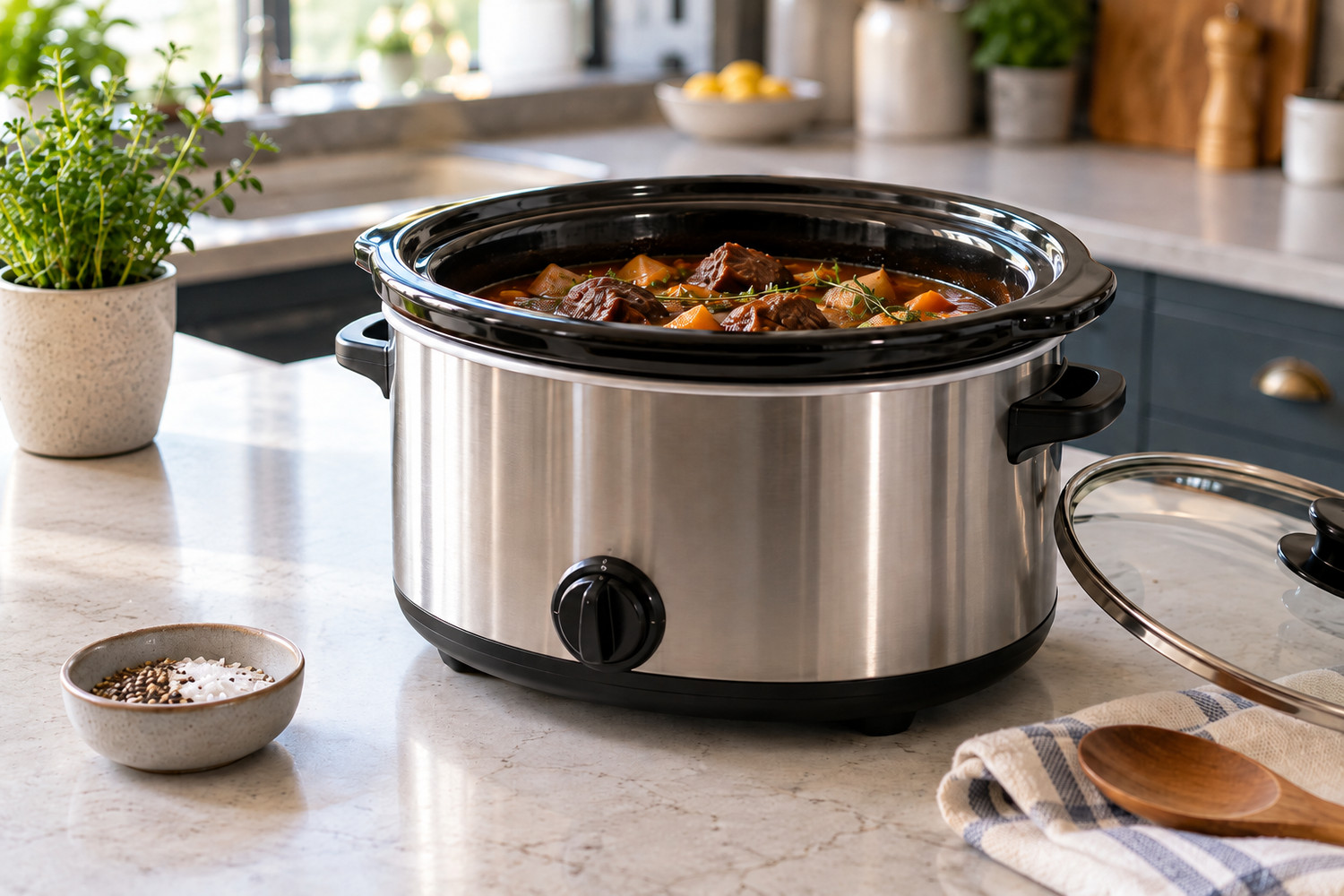
Slow cooker with ceramic pot UK: are these traditional cookers better than newer models with metal inserts? A removable ceramic or stoneware crock can be an excellent choice for soups, stews, casseroles and family dinners. It retains heat well, has no conventional non-stick coating to peel and often cleans easily. However, it is heavier than many metal inserts and normally cannot be placed directly on a hob.
Choosing between ceramic and metal is less about one material always cooking better and more about how you prepare meals, clean up and store the appliance. This UK guide explains the differences, including ceramic-coated alternatives, food-contact safety claims and what to look for in a removable pot.
What Makes a Ceramic Slow Cooker Different?
A traditional slow cooker often has a thick glazed stoneware bowl inside an electrically heated outer housing. The ceramic vessel holds the food and distributes heat gradually during the cooking cycle. The heavy bowl also keeps food warm for a while after the appliance is turned off, though it must not be used to store hot food indefinitely.
Other designs use aluminium, stainless steel or metal with a non-stick or ceramic-type coating. Those lighter inserts can be easier to lift, and some are suitable for browning ingredients on a hob. The Beko UK explanation of slow cookers describes the traditional ceramic or porcelain pot within a heated metal casing.
Are Ceramic Slow Cookers Better?
For straightforward everyday slow cooking, ceramic has strong advantages. A glazed pot provides a smooth cooking surface and does not rely on a conventional applied non-stick coating that may wear with repeated use. Many models also allow the removable bowl to go in a dishwasher, provided the manufacturer’s instructions say so.
The drawbacks are weight and vulnerability to knocks or abrupt temperature changes. A large ceramic crock full of stew can be awkward to carry, and dropping it may cause chips or cracks. Aluminium inserts are lighter and sometimes allow searing on the hob. Neither material guarantees better flavour or more consistent cooking: the heating system, recipe and fill level matter too.
Our ceramic versus aluminium slow cooker guide compares these strengths and weaknesses in detail.
Slow Cooker With Ceramic Pot UK: What Should You Look For?
Begin with capacity rather than colour or styling. A compact pot can suit one or two people, while a larger household may need a model with enough space for dinner and leftovers. Check the recommended working fill level; the number of litres printed on the box does not mean you should fill the bowl to its rim.
Next consider how easily you can remove the pot, the weight of the insert and the fit of the lid. Look at the warranty, replacement-pot availability, low and high settings, any timer and the manufacturer’s cleaning guidance. An attractively priced cooker is less useful if its bowl is too heavy for you to manage comfortably.
Our UK slow cooker size guide explains typical capacities, while our complete slow cooker buying guide covers other features worth comparing.
Do All Slow Cookers Have Ceramic Pots?
No. Traditional models frequently use stoneware, but many modern slow cookers and multicookers have removable aluminium or stainless-steel inserts. Some of those metal vessels feature a ceramic-style non-stick coating, which can be confusing when product descriptions simply say ‘ceramic’.
A solid ceramic or stoneware crock is generally thicker and heavier than ceramic-coated aluminium. A ceramic-coated insert is primarily a metal pot with a specialised surface finish. These products have different care requirements, and their suitability for direct hob heat depends on the exact manufacturer’s instructions.
Which Slow Cooker Has the Best Ceramic Insert?
There is no single best ceramic insert for every UK home. The most practical choice depends on what you cook and whether you prioritise capacity, a dishwasher-safe bowl, programmable controls or easy handling. Look for an insert that feels robust, sits securely in the base and has clearly documented cleaning and replacement instructions.
UK independent reviews can provide a useful shortlist. For example, The Independent’s slow cooker reviews discuss how particular cooking pots perform in real recipes, including cleaning and ease of use. Check whether each reviewed ‘ceramic’ vessel is solid stoneware or ceramic-coated metal before comparing it with another model.
Rather than buying solely on a reviewer’s overall rating, verify the pot material on the manufacturer’s specification sheet. A cooker that suits a family of five might be unnecessarily bulky for someone living alone.
Where to Buy a Ceramic Slow Cooker Non-Toxic UK?
You can look at established UK kitchenware shops, department stores and the official websites of recognised appliance makers. But treat ‘non-toxic’ as a claim to investigate, not a certification on its own. Ask whether the insert is intended for food contact, what material and glaze it uses and whether the manufacturer can provide relevant compliance information.
In a June 2025 UK Parliament answer, the government explained that ‘non-toxic’ and ‘quasi-ceramic’ are not officially defined terms in food-contact regulations. The Food Standards Agency’s position is that food-contact materials must not transfer substances to food in amounts that could endanger health, whatever marketing language is used.
For ceramic ware, UK rules address migration of substances such as lead and cadmium. The Ceramic Articles in Contact with Food (England) Regulations 2006 set requirements for ceramic articles. Buy products clearly intended for cooking and food contact, avoid anonymous items with unsupported safety claims, and request clarification from a manufacturer if you are concerned.
Is It a Good Idea to Buy a Slow Cooker With Removable Ceramic Pot?
For most households choosing a traditional ceramic slow cooker, a removable pot is a valuable feature. It makes washing easier because you can lift the cooking vessel away from the electrical housing. You can also transfer the pot to the table for serving when the manual permits, using suitable protection because it can remain hot.
A fixed cooking vessel is less convenient to clean, since the powered base must never be submerged. A removable insert also makes it easier to inspect for chips and cracks, although replacements must be designed for the exact model. Do not use a bowl from another cooker simply because it looks the same size.
Can a Ceramic Slow Cooker Pot Go in the Dishwasher?
Many removable glazed stoneware inserts are dishwasher safe, but not all. Follow the manual for both bowl and lid. The electrical base and power lead must never go in the dishwasher or sink. Avoid abrasive scourers, especially if a bowl has a specialised surface finish.
Allow a hot insert to cool before washing. Extreme temperature changes can stress ceramic, and a chipped or cracked bowl should not continue in service. The easier a pot is to clean safely, the more likely you are to use it for everyday meals.
Can You Sear Meat in a Ceramic Slow Cooker?
Usually not on a conventional hob. Most traditional glazed stoneware inserts are intended for use inside the slow cooker’s heating base. Placing one directly over a gas burner, induction zone or other hob without explicit approval risks damage.
If browning onions and meat before slow cooking matters to you, an electrically heated sauté function or an approved hob-safe metal insert may be more convenient. Our UK guide to slow cookers with a sauté function explains the differences. You can also use a separate frying pan before transferring ingredients to a ceramic crock.
Are Ceramic Slow Cookers Good for Large Joints of Meat?
Yes, provided the joint fits with the lid fully closed and the cooker is large enough for the recipe. An oval ceramic pot may make it easier to fit a whole chicken or long beef joint, while a round pot can be convenient for soups and chopped stews. Shape and capacity are separate choices.
For a closer comparison, read our oval versus round slow cooker guide. A heavy ceramic bowl can also make lifting a large roast more awkward, so think about your ability to handle it safely when full.
Are Ceramic Slow Cookers More Energy Efficient?
Not automatically. Energy use depends mainly on the appliance’s electrical design, wattage, thermostat and cooking duration rather than whether the removable insert is ceramic or metal. Ceramic’s heat retention does not by itself establish lower electricity costs.
If running costs matter, compare wattage and the duration of recipes you typically cook. Our UK slow cooker electricity guide explains how to estimate usage. Choosing a suitable capacity and using the correct recipe settings can be more important than choosing a particular bowl material.
Frequently Asked Questions
Is Stoneware the Same as Ceramic in a Slow Cooker?
Stoneware is a type of ceramic. In slow cooker descriptions, ‘ceramic pot’ often means a glazed stoneware crock, but always check the product specifications to avoid confusing it with ceramic-coated metal.
Are Ceramic Pots Safer Than Non-Stick Metal Pots?
Neither material is automatically safer when both are properly made and used according to instructions. Look for food-contact compliance, intact surfaces and sensible cleaning advice. Avoid using cracked ceramic or badly damaged coatings.
Can You Put a Ceramic Slow Cooker Bowl in the Oven?
Only if the manufacturer specifically approves oven use, including any temperature limits. Dishwasher-safe and oven-safe are different properties; never assume approval for one means approval for the other.
What Size Ceramic Slow Cooker Is Best for Two People?
Many two-person households can consider a smaller capacity, often roughly 2.5 to 3.5 litres, but leftovers and recipe quantities change the ideal choice. Check working capacity and dimensions rather than relying only on the box label.
Final Verdict: Is a Slow Cooker With Ceramic Pot UK Better?
A slow cooker with ceramic pot UK is a sensible option if you want a familiar, durable cooking surface and do not mind a heavier insert. A removable stoneware bowl can simplify cleaning, but metal or ceramic-coated alternatives may suit people who need lighter cookware or hob-safe searing. Choose by usable capacity, verified food-contact safety, care requirements and how you actually cook, not by a blanket claim that one material is always better.