
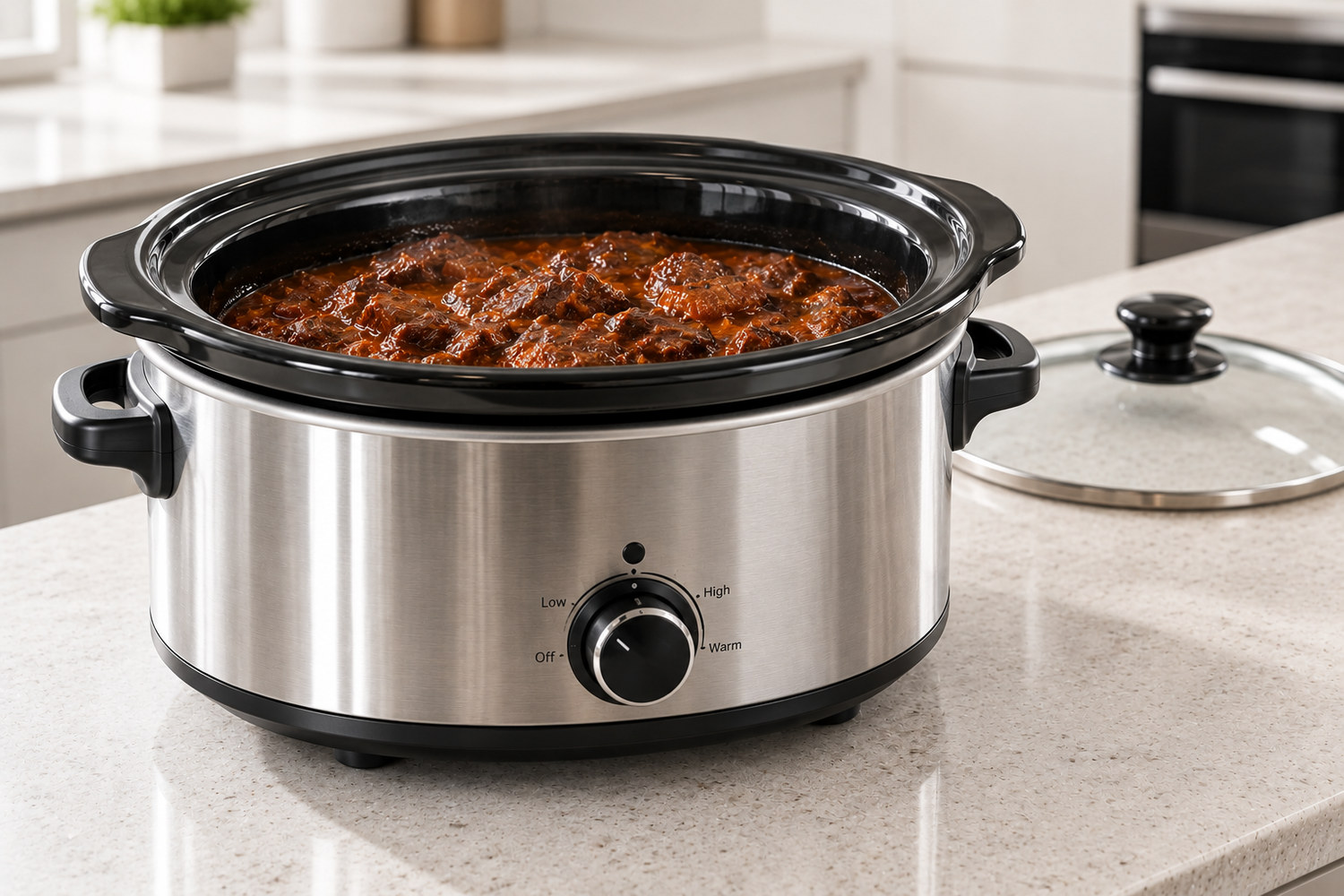
Can you put the ceramic part of a slow cooker in the oven UK? Sometimes, but only if the manufacturer explicitly says that the removable ceramic or stoneware pot is oven-safe. A ceramic bowl being suitable for slow cooking does not mean it can withstand every oven temperature. Some models permit oven use within limits, while others prohibit it. Never place the electrical heating base, plug or cable in an oven.
Before using your slow cooker insert for a casserole or finishing a dish in the oven, check the exact model number and instruction booklet. The advice also differs for microwaves, fridges, dishwashers and hobs. Here is what UK households need to know about each one.
Why Isn’t Every Ceramic Slow Cooker Pot Oven-Safe?
Slow cooker inserts are usually glazed stoneware designed to warm gradually in a surrounding electric heating housing. A conventional oven heats the vessel differently, and some models may not be tested for direct oven use. Ceramic can crack after sudden temperature changes, impact or use outside the manufacturer’s intended conditions.
The word ceramic can also describe ceramic-coated metal, which is different from thick stoneware. Both require their own care instructions. Oven-safe, microwave-safe and dishwasher-safe are separate claims: permission for one does not imply permission for the others.
Can You Put the Ceramic Part of a Slow Cooker in the Oven UK if It Is Removable?
Removability is helpful for washing and serving, but it is not proof of oven compatibility. Check the manual or manufacturer’s UK support information for the exact model, including maximum temperature, whether preheating is allowed, grill restrictions and whether the lid is oven-safe.
If the manufacturer approves oven use, follow the temperature and handling guidance precisely. Use dry oven gloves, support the whole heavy crock and place it on a stable heat-resistant surface when removed. Do not move it directly from the fridge into a hot oven unless the instructions explicitly permit that transition.
If no instructions are available, transfer the food to a separate ovenproof casserole dish instead. Our guide to ceramic slow cooker pots in the UK explains how stoneware compares with alternative inserts.
How Can You Check Whether Your Slow Cooker Bowl Is Oven-Safe?
Find the make and full model identifier, usually printed on a rating label underneath or behind the base. With the cooker switched off and unplugged, record that information and look up the matching UK manual. Search within it for oven, cooking pot, crock, stoneware and maximum temperature.
Read any exception carefully: the removable pot might be oven-safe while the glass lid, handle or plastic fittings are not. If the instructions specify a temperature limit, do not exceed it. A claim for a different model in the same brand’s range does not establish what your bowl can withstand.
For example, Lakeland’s UK 3.5-litre slow cooker instructions warn against using the ceramic pot on gas or electric hobs and caution against extremes of temperature. That is a reminder to check exact instructions rather than assume all ceramic crocks behave alike.
Can You Put the Ceramic Part of a Slow Cooker in the Microwave?
Only if the manufacturer’s instructions explicitly approve microwave use. Some removable ceramic bowls are microwave-safe, but others are not. Decorative or functional metal elements, certain glazes and handles may make a vessel unsuitable. Never microwave the powered base, lid parts with metal fittings or anything the manufacturer excludes.
If approval is clear, check any limitations and ensure the bowl fits the microwave without obstructing the turntable or touching the walls. Heavy ceramic may become hot from the food inside, so use oven gloves. Stir and check reheated food thoroughly because microwaves can heat unevenly.
The Food Standards Agency’s guidance on cooking and reheating food recommends reheating leftovers until steaming hot throughout and following microwave instructions. Reheat only the portion you need where possible.
Can You Put the Ceramic Part of a Slow Cooker in the Fridge?
A cooled, manufacturer-approved removable bowl may be suitable for refrigerator storage, but using the whole heavy crock to cool a large meal is not ideal. Thick stoneware can retain heat and large portions of stew cool slowly, making it harder to bring food to a safe storage temperature.
A better approach is to divide leftovers into shallow food-safe containers, let them cool promptly and refrigerate within one to two hours. The Food Standards Agency’s UK chilling advice explains why food should be cooled quickly and stored in a fridge at an appropriate temperature.
Avoid moving a piping-hot ceramic crock straight into a cold fridge, both to protect the bowl against thermal shock and to avoid warming nearby refrigerated food. If a manufacturer permits the empty cooled pot in the fridge, that does not automatically approve cold-to-hot oven use.
Can You Put the Ceramic Part of a Slow Cooker in the Dishwasher?
Many glazed ceramic slow cooker inserts are dishwasher-safe, but always check the manual. The lid may have different instructions, especially where handles, hinges or seals are involved. Never put the electrical heating base in a dishwasher or immerse it in water.
Let the pot cool before washing. Remove stubborn sauce with warm water, washing-up liquid and a non-scratch sponge rather than metal scourers. A crack, deep chip or damaged glaze is a reason to stop using the insert and ask the manufacturer about a compatible replacement.
Our article Are Slow Cookers Dishwasher Safe? explains the differences between ceramic bowls, glass lids and electrical components.
Can You Put the Ceramic Part of a Slow Cooker on the Stove?
Usually not. Most traditional stoneware slow cooker crocks are not designed for direct contact with a gas flame, electric ring or induction hob. Direct heat can produce stresses that crack the bowl. Never try it unless the manufacturer clearly authorises that exact insert and heat source.
Some slow cookers instead use specially designed metal pots that can sear food on the hob. Others have an electric Sear/Sauté function in the base. That is not evidence that a conventional ceramic insert can be put on a burner.
For the alternatives, see our UK comparison of slow cookers with a sear function and guide to slow cookers with sauté settings.
What Is Thermal Shock and How Do You Avoid It?
Thermal shock occurs when different areas of a material change temperature too quickly, creating stress. In a ceramic cooking pot this may lead to cracks or breakage. Risk increases when hot stoneware meets cold water or a chilled bowl is subjected to rapid intense heat.
Let the crock cool naturally on a heat-resistant surface before washing. Do not pour cold stock into a scorching hot bowl or place a frozen ingredient against hot ceramic if your appliance’s instructions prohibit it. Follow the maker’s recommended starting temperatures and never use a bowl already showing cracks.
Can You Finish Slow-Cooked Food Under the Grill?
Only if the vessel and any lid are explicitly approved for grilling. Oven-safe does not automatically mean grill-safe because the intense radiant heat is different. Many glass lids, handles and stoneware inserts should not be placed directly under a grill.
If you want a browned cheese topping or crisp finish, transfer the food to a separate grill-safe dish. This is often simpler than trying to establish whether a heavy slow cooker pot can safely tolerate a grill element.
Is It Safe to Cook in a Damaged Ceramic Insert?
A cracked crock can leak liquid into the heating base, fail under heat or harbour residue within damaged areas. Stop using any insert with visible structural cracks or significant chips. Do not attempt to repair a cooking surface with household glue or continue using it because the outside looks intact.
Ask the manufacturer for a replacement matched to the exact model. Avoid substituting a similar-looking pot: differences in dimensions and heat transfer can affect fit and safe operation. Our ceramic versus aluminium slow cooker comparison covers material trade-offs when replacing an appliance.
Frequently Asked Questions
Can You Bake Bread in a Ceramic Slow Cooker Pot?
Only if oven use is explicitly approved and the stated temperature suits the recipe. Otherwise use a conventional oven-safe tin or casserole. The fact that a slow cooker can make certain breads on its own settings does not prove the insert can go into a conventional oven.
Can the Glass Slow Cooker Lid Go in the Oven?
Possibly, but confirm separately. A lid can have a different maximum temperature from the bowl, and its handle may not tolerate oven heat. Never assume both pieces share the same rating.
Can You Put a Cold Ceramic Slow Cooker Pot Into a Preheated Oven?
Do not do so unless the manufacturer explicitly permits it. A cold crock exposed to rapid heat change may crack. Transferring food to an ovenproof dish is the safer choice when instructions are unclear.
Are All Removable Slow Cooker Inserts Ceramic?
No. Some models use stainless steel, aluminium or coated metal. Their hob, oven and dishwasher permissions differ. Check the actual material and instructions instead of relying on the generic word insert.
Final Verdict: Can You Put the Ceramic Part of a Slow Cooker in the Oven UK?
So, can you put the ceramic part of a slow cooker in the oven UK? Yes for certain manufacturer-approved inserts, but definitely not as a general rule. Check the exact model, permitted temperatures and lid restrictions before trying. The same cautious approach applies to the microwave, fridge, dishwasher and hob. If you cannot verify that the pot is suitable, transfer the food to cookware designed for the task.