
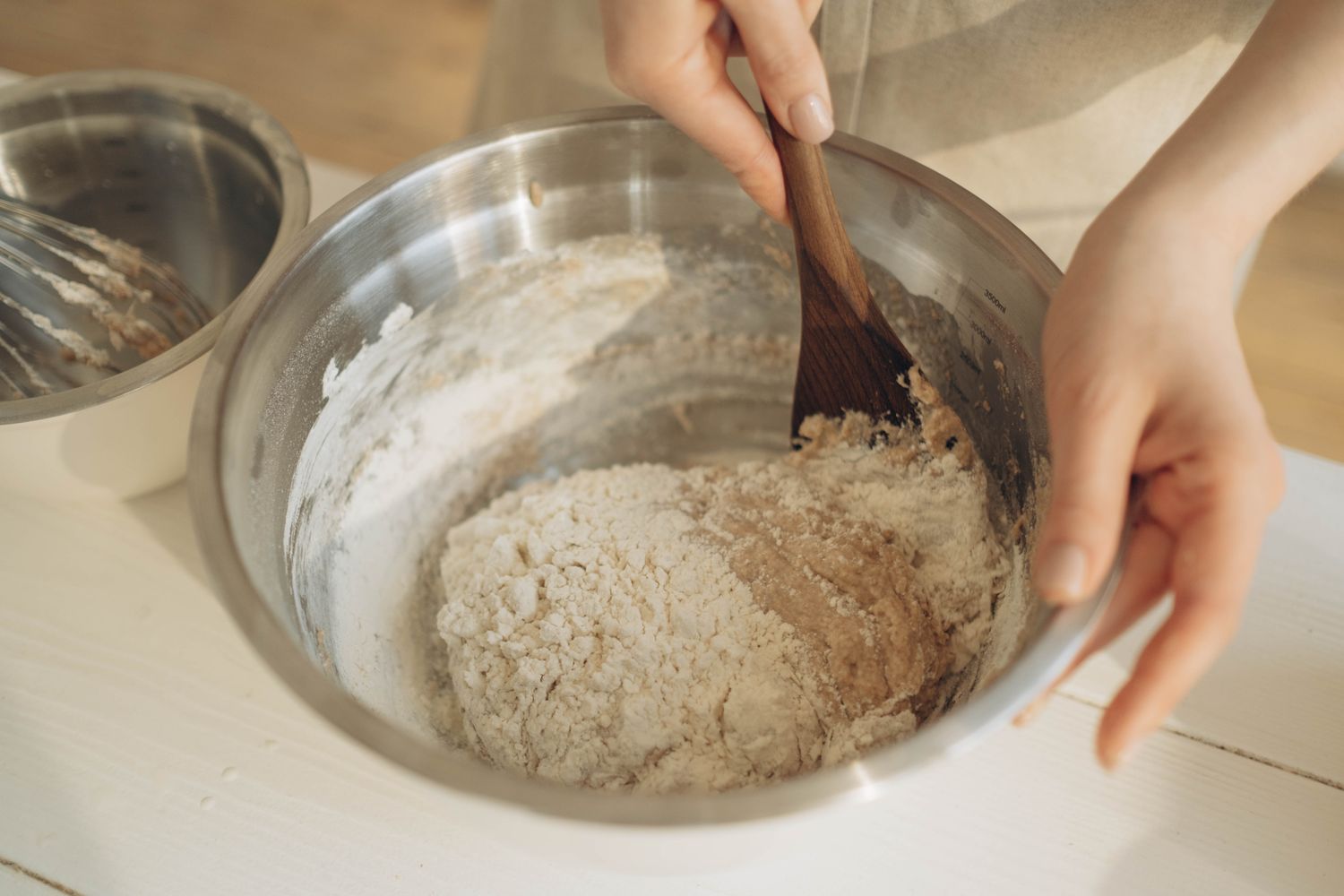
For 1kg of finished bread dough, a 3-litre mixing bowl can be enough for proving, but a 4–5-litre bowl is usually more comfortable for mixing and folding. The extra space makes it easier to work without pushing flour or dough over the edge. If you’re making a very wet dough, regularly doubling recipes or leaving it to rise in the same bowl, going larger can help.
There’s a reason baking advice differs: the Real Bread Campaign suggests a 3L bowl for around a kilo of dough, while BBC Maestro baking notes call a 5L bowl ideal for handling that quantity. Both can be reasonable depending on whether you’re mainly proving the dough or actively working it.
Mixing bowl sizes for 1kg of bread dough
| Bowl capacity | How it works for 1kg dough | Best suited to |
|---|---|---|
| 2L | Likely cramped | Smaller batches rather than a full kilo |
| 3L | Can work, especially for proving | Compact kitchens and fairly manageable dough |
| 4L | Comfortable starting point | Hand mixing, kneading and folds |
| 5L | Roomy and flexible | Wet dough, easier mixing and future larger batches |
| 6L or larger | Plenty of room, but may feel oversized | Batch baking and larger recipes |
These are practical suggestions, not manufacturer capacity ratings. The shape and depth of the bowl matter too: a broad, shallow bowl behaves differently from a narrow, deep one holding the same number of litres.
Does 1kg of dough mean 1kg of flour?
No, and it’s an important distinction. A dough weighing 1kg already includes its water, flour, salt and any other ingredients. If your recipe starts with 1kg of flour, the finished dough can weigh substantially more.
For example, a recipe with 1,000g flour, 650g water, 20g salt and 7g yeast makes about 1,677g of dough before any losses. That’s much more than a 1kg dough batch and may call for a larger mixing bowl.
Why do you need space for the dough to rise?
Fermenting dough produces gas and increases in volume. Many bread recipes call for the dough to rise substantially, sometimes roughly doubling before the next stage. A bowl that feels large enough immediately after mixing can become too small later.
Choose a bowl that allows for the expected rise described in your recipe. If the recipe calls for a different proofing container or a long cold fermentation, follow those instructions instead.
How can you check whether your current bowl is big enough?
- Check the dough quantity. Add up the ingredient weights to estimate the finished dough mass.
- Find the bowl’s capacity. Look for a manufacturer’s litre marking, or estimate volume by filling it with measured amounts of water while it’s empty.
- Consider how you’ll use it. Mixing flour and water by hand generally benefits from more headroom than simply holding already-kneaded dough.
- Allow for the rise. Your dough shouldn’t be so close to the rim that it overflows during fermentation.
- Check handling. You should be able to stretch and fold the dough without continually scraping it off your worktop.
Don’t judge a bowl only by its diameter. A wide, shallow vessel may provide excellent hand access but less room for rising dough than a deeper one.
Is a 3-litre bowl big enough for a 1kg loaf?
It can be. The Real Bread Campaign’s home-baking guide describes 3L as a good size for about a kilo of dough, with enough room to double in size. If you mainly use a bowl for the first rise after kneading elsewhere, that may be all you need.
If you’re folding sticky dough inside the same bowl, you might prefer 4–5L. The extra capacity isn’t essential for every recipe, but it gives your hands more working room.
When would you choose a 5-litre mixing bowl?
A 5L bowl is a strong all-round choice if you’re buying one specifically for home bread making. It gives space for mixing, scraping down the sides and handling wet dough. BBC Maestro’s baking equipment notes recommend a 5L bowl for around a kilo of dough.
The trade-offs are storage and worktop space. A larger bowl can be harder to fit in a cupboard and may be unnecessary if you only make small batches.
Stainless steel, glass or plastic: which is better?
Stainless steel is lightweight, durable and easy to clean. It’s a convenient choice for bread mixing and doesn’t risk shattering if dropped. Plastic can also be light and practical, especially if it comes with a suitable lid. Glass lets you see the dough through the sides but is heavier and breakable.
Choose a food-safe bowl with a stable base. If you’re covering dough for proving, use a clean lid, reusable cover or other covering suitable for your recipe so the surface doesn’t dry out.
Do you need a special bread-dough mixing bowl?
No. A sturdy, clean kitchen mixing bowl is fine if it’s large enough and suitable for the ingredients and method. A flexible dough scraper can make it easier to move sticky dough without wasting mixture, but you don’t need specialist equipment to get started.
Where to buy a suitable mixing bowl
If you’d like extra working room, you can browse 5-litre stainless steel mixing bowls on Amazon UK, or compare 4-litre bowls. Check the stated capacity, overall dimensions, dishwasher suitability and whether a lid is included.
These are general Amazon shopping searches rather than endorsements of particular products.
Frequently asked questions about What Size Mixing Bowl Do You Need for 1kg of Bread Dough
Can I mix 1kg of bread dough in a 2L bowl?
It’ll often be cramped, especially when folding or proving. A 3L or larger bowl usually gives you more working room.
What size bowl for 1kg of flour?
You’ll generally need a larger bowl than for 1kg of finished dough, because the water and other ingredients add weight and volume. Calculate the dough’s total weight first, then consider a 5L or larger bowl depending on your recipe.
Does bread dough need to double in the bowl?
Many recipes call for a substantial rise, sometimes doubling, but not all do. Follow the fermentation cues in your recipe and use a container with enough headroom.
Can I prove bread dough in a stainless-steel bowl?
Yes. A suitable clean stainless-steel mixing bowl works for many home bread recipes. Cover the dough as directed so it doesn’t dry out.
Is a deeper bowl better than a wider bowl?
Deeper bowls can provide more space for rising dough, while wider bowls can be easier for folding. Think about whether you’ll mainly mix, prove or do both in the bowl.
Bottom line
For 1kg of finished bread dough, 3L can be enough, but a 4–5L mixing bowl is usually a more comfortable choice. If you’re working with 1kg of flour rather than 1kg of dough, calculate the larger final batch size before buying.
Sources
Disclosure: Progressive Housewares may earn a commission from qualifying purchases through affiliate links, at no additional cost to you.