
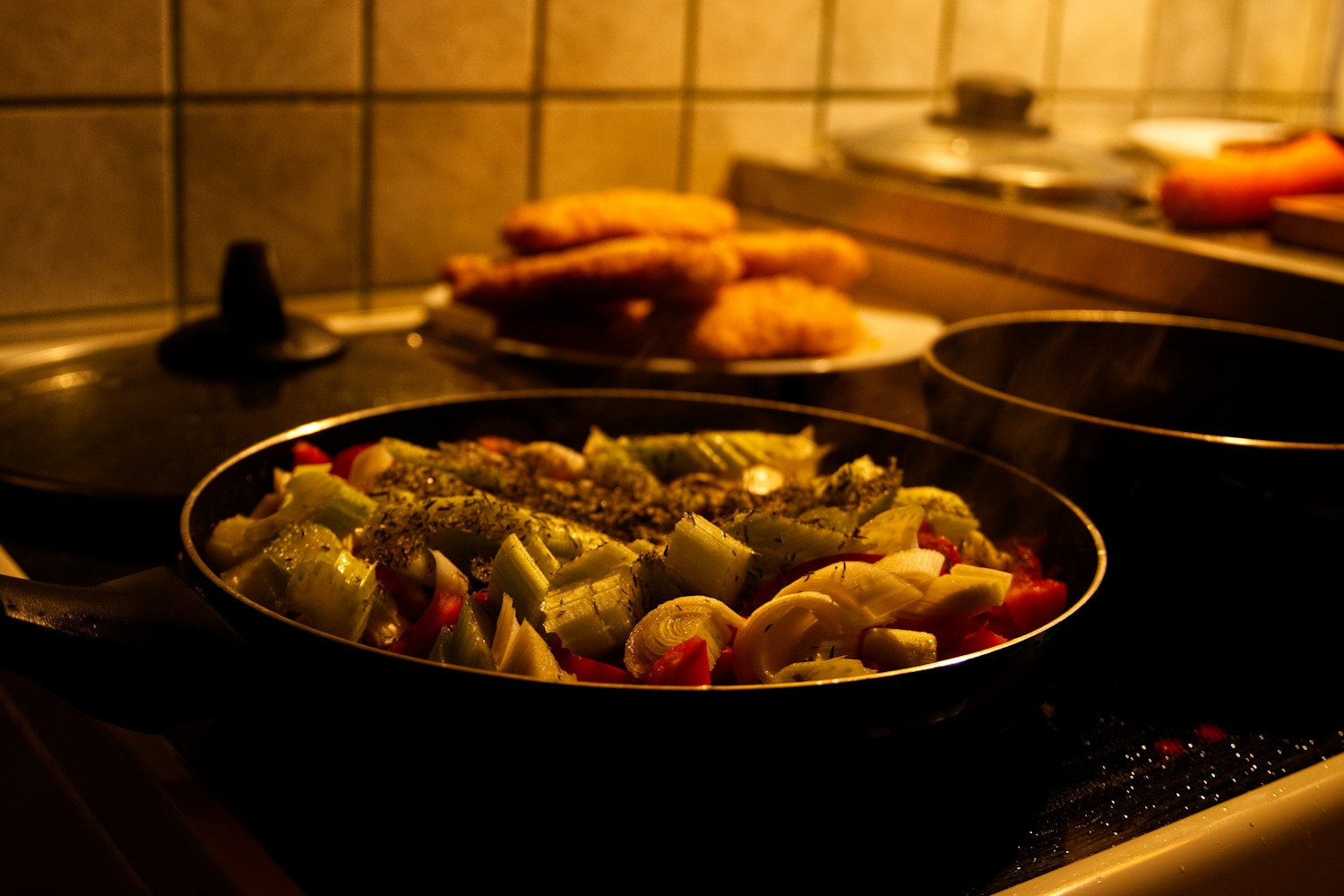
For a conventional electric hob, the best type of non-stick wok is a flat-bottomed, heavy-based model that the manufacturer explicitly rates for your hob. For most UK kitchens, a 28–30cm wok or deep stir-fry pan is a practical starting point. Look closely at the diameter of the flat base, not just the advertised size across the rim, and choose a coating you can use within its stated temperature limits.
You don’t need to spend £100 to stir-fry vegetables, noodles and chicken at home. But buying the wrong shape can leave you with a pan that barely touches a ceramic hob, takes ages to heat or doesn’t register on induction. Here’s what matters before you choose a non-stick wok.
Quick answer: which non-stick wok suits your electric hob?
| Electric hob type | Look for | Avoid |
|---|---|---|
| Flat radiant ceramic hob | Smooth, flat, stable base; explicitly rated for ceramic hobs | Round-bottomed woks and gas-style wok rings |
| Solid electric hotplate | Thick, flat base with good contact; manufacturer’s electric-hotplate approval | Warped or uneven bases |
| Induction hob | Flat, magnetic base labelled induction-compatible | Non-magnetic aluminium-only bases without induction construction |
| Older electric cooker with coil elements | Stable flat-based pan approved for that cooker | Round-bottomed woks that rock or sit insecurely |
Some people use ‘electric stove’ for all these cookers, but compatibility differs. A pan working on a radiant ceramic zone isn’t automatically induction-compatible, even if both cookers have a shiny black glass surface.
The three useful types of non-stick wok to compare
1. A 28cm flat-bottomed non-stick wok.
A 28cm wok is a sensible choice for one or two people, smaller kitchens and frequent weeknight meals. It usually feels manageable to lift and wash, and a shallower design can make it easier to toss food without the pan becoming cumbersome.
Check the flat base measurement: two 28cm models can be very different underneath. If you have a relatively small electric heating zone, a sensible base match can matter more than gaining a couple of centimetres across the rim.
2. A 30–32cm heavy-based non-stick wok
A larger wok gives you more room to move ingredients around and can be useful for several portions. But a 32cm rim doesn’t necessarily mean a large area makes contact with the hob. The sloping sides may remain cooler than the base on a flat electric cooker.
For family stir-fries, choose a good base and stable handle before simply buying the widest wok available. A big pan crowded with wet vegetables can still steam rather than fry.
3. A wide, deep non-stick stir-fry pan
A deep frying pan with sloping sides and a broad flat base is sometimes the more effective choice on an electric hob. It sacrifices a little of the classic wok shape but can put more food into contact with the heated surface.
This is particularly worth considering for radiant ceramic cookers, where heat is concentrated in the ring beneath the glass. If you care most about practical cooking rather than traditional wok technique, a deep stir-fry pan may be better value.
Why a flat bottom matters more than the word ‘wok’
Traditional round-bottomed woks are designed around concentrated heat, typically from a powerful gas flame. A conventional ceramic hob transfers heat through a flat contact surface. If only a small curved patch touches the glass, heat transfer is poor and the pan may be unstable.
A flat-bottomed non-stick wok gives the pan a stable cooking surface and better contact with the hob. Don’t place a gas wok ring on a glass-ceramic cooker as an improvised solution; follow the cooker manufacturer’s instructions on suitable cookware.
The distinction matters on induction too. The flat magnetic base needs to be large enough for the hob’s pan-detection system, and the precise minimum base size depends on the appliance.
Should you buy aluminium, hard-anodised or stainless-steel non-stick?
Many affordable non-stick woks use an aluminium body because aluminium spreads heat readily and keeps the pan relatively light. A hard-anodised aluminium body can be durable, but hard anodising on the outside doesn’t by itself tell you what the cooking-surface coating is or whether the pan works on induction.
Some non-stick woks use stainless steel with an aluminium core or disc base. That can be useful for heat distribution, especially where the base is sufficiently substantial. There isn’t one automatically superior construction for every electric cooker.
For induction, look for an explicit induction rating rather than assuming all stainless steel works or all aluminium doesn’t. Some aluminium pans include a suitable magnetic induction plate.
What does ‘ceramic non-stick’ mean?
A ceramic non-stick coating isn’t the same thing as a pan being compatible with a ceramic hob. The first describes the cooking surface; the second describes the heat source. A ceramic-coated wok can be suitable or unsuitable for induction or radiant ceramic depending on its base.
Conventional PTFE-based coatings and ceramic-style non-stick coatings both have strengths and limitations. The most relevant buying checks are the specified temperature limit, care requirements, durability expectations and whether the model suits your hob. Neither type should be heated beyond its manufacturer’s instructions.
Can you use a non-stick wok on high electric heat?
You can stir-fry on an electric hob, but don’t treat a coated wok like a traditional uncoated carbon-steel wok on a restaurant burner. Many non-stick coatings have maximum temperature limits, and leaving a pan empty on a high setting can overheat it surprisingly quickly.
Follow the particular pan’s guidance for preheating and heat settings. A non-stick wok is well suited to everyday vegetables, noodles, rice and saucy stir-fries where extreme heat isn’t essential. If your cooking specifically depends on very high-temperature searing, an uncoated pan may be more appropriate.
How do you match the wok to your electric ring?
Start by checking the hob manual for recommended pan base sizes. Then find the wok’s flat bottom diameter, which is often smaller than its top rim. A listing that says ’30cm’ without specifying the base may leave an important compatibility question unanswered.
As an illustration, a 30cm wok might have a relatively small flat cooking base, whereas a 30cm deep frying pan could have a broader one. That isn’t a universal measurement — check the specific products rather than assuming.
On a radiant ceramic hob, a well-matched, substantial base helps distribute heat more efficiently. On induction, an undersized magnetic base may not be detected, and some larger zones have a stated minimum pan size. A base that’s too wide for a small electric zone may heat unevenly at its edges.
Is a lid worth having?
A lid is useful if you sometimes steam vegetables, finish dumplings or cook saucy dishes in the wok. It isn’t necessary for every quick stir-fry, but a well-fitting lid can make one pan more versatile.
If you buy a wok without a lid, don’t assume any 30cm universal lid will fit. The rolled edge, inside rim and shape of the wok can affect compatibility. Check whether the manufacturer supplies a matching lid or gives exact measurements.
What about weight and handles?
A wok that’s too heavy to lift when full can be a nuisance even if it cooks well. On glass hobs, it’s particularly important to lift rather than drag cookware so you don’t scratch the surface.
Look for a secure long handle that’s comfortable in your hand. A helper handle can be useful on wider woks, especially when transferring cooked food. If the handle is oven-safe, confirm the exact temperature limit; the pan body and handle may have different ratings.
A buying checklist for £25–£80 non-stick woks
| Check | What you want to see |
|---|---|
| Hob compatibility | Explicit approval for your type of electric hob |
| Shape | Flat bottom, no rocking |
| Pan diameter | Usually 28–30cm for everyday use; larger if genuinely needed |
| Base diameter | A good match for your hob’s cooking zone |
| Construction | Substantial heat-spreading base, not flimsy metal |
| Coating | Clearly stated care and heat limits |
| Handle | Secure and manageable, with helper handle if useful |
| Extras | Lid included only if you’ll use it |
For a straightforward purchase, you can compare flat-bottomed non-stick woks for electric hobs on Amazon UK, browse 30cm non-stick woks for ceramic hobs or look at induction-compatible non-stick woks. Check each individual listing rather than trusting that every search result is compatible.
If you want more cooking contact with the ring, compare deep non-stick stir-fry pans. These are general shopping links; we haven’t bought or tested the products shown.
Which features aren’t worth paying extra for?
A fancy coating name isn’t enough evidence of better performance, especially without care instructions and a clear construction specification. Similarly, a claimed extra-large diameter doesn’t help if the flat base is poorly matched to your cooker.
Avoid paying much more just for a lid, detachable handle or accessories you’ll never use. Prioritise stable contact with the electric ring, a usable non-stick surface, sensible weight and explicit hob compatibility.
How to get better stir-fries on an electric hob
- Prepare all your ingredients before heating the pan. Electric ceramic hobs can be slower to respond when you change settings.
- Keep batches manageable. Overcrowding releases moisture and cools the cooking surface.
- Follow the coating’s preheat instructions. Don’t leave an empty non-stick wok heating unattended.
- Dry ingredients where practical. Less surface water can improve browning.
- Use suitable utensils. Avoid scratching or cutting into the non-stick coating.
- Lift the pan to move it. Don’t scrape it across a glass-ceramic surface.
Frequently asked questions about best non-stick wok for an electric hob: what should you look for
Can you use a non-stick wok on an electric ceramic hob?
Yes, if it has a smooth, flat, stable base and the manufacturer explicitly approves it for ceramic hobs. Round-bottomed gas woks aren’t suitable for a standard flat ceramic zone.
What is the best wok size for a family of four?
A 30–32cm rim diameter may offer useful room, but check the flat base diameter and actual capacity. A broader-based stir-fry pan can sometimes be more practical on an electric hob than a bigger, steep-sided wok.
Will an induction non-stick wok work on a regular electric hob?
Often, but not automatically. Check the model’s full list of approved hob types and its base construction. Induction compatibility alone doesn’t replace the manufacturer’s installation and use guidance.
Are ceramic-coated woks better for ceramic hobs?
Not inherently. ‘Ceramic-coated’ describes the non-stick surface; ‘ceramic hob’ describes the cooker. Base flatness and approved hob compatibility are what matter.
Can you get wok hei on an electric hob with a non-stick wok?
It’s difficult to reproduce the intense heat and flame effects of a commercial wok burner on a normal electric hob. A non-stick wok also has temperature limits. Focus on well-browned, manageable batches rather than overheating the coating.
Is a frying pan better than a wok on an electric cooker?
Sometimes. A wide frying pan can put more food in direct contact with the heated base, while a wok offers higher sides for tossing and mixing. Choose according to the meals you actually cook and the size of your hob ring.
Bottom line
The best non-stick wok for a typical electric hob is a flat-bottomed, heavy-based model that explicitly supports your cooker. For many households, a 28–30cm wok or a deep stir-fry pan is a sensible buy within £25–£80. Compare the flat base diameter, coating care and handle comfort before worrying about a flashy brand name. If your cooker is induction rather than conventional ceramic, check for a suitable magnetic base too.
Sources and further reading
Disclosure: Progressive Housewares may earn a commission from qualifying purchases through affiliate links, at no additional cost to you.